





Politics News

Sen. Mitch McConnell announces he has been discharged from rehab facility

Mitch McConnell delivers an opening statement during a Senate Appropriations Committee hearing on the FY2027 budget request in the Dirksen Senate Office Building on Capitol Hill on May 12, 2026, in Washington, D.C. (Chip Somodevilla/Getty Images)

(WASHINGTON) -- Republican Sen. Mitch McConnell, after weeks of in-patient care following a fall in mid-June, announced via a statement from his office on Thursday that he has been discharged from a rehabilitation center and will continue his recovery at home.

"Earlier today, I was discharged from the rehabilitation center to continue my recovery at home," McConnell said in a statement. "Elaine and I are grateful for the many well wishes and support from friends, colleagues, and Kentuckians, and for the attentive care I’ve received from excellent doctors, nurses, therapists, and hospital staff."

"On the advice of my doctors, I’ll maintain an intensive regimen of physical therapy from home during the state work period, and I’ll continue to engage with my staff and colleagues on important Senate business," McConnell added.

McConnell was first hospitalized on June 14 for reasons that were initially undisclosed by his office.

While his office has released two photographs of McConnell since his hospitalization, the Kentucky senator has not been seen in public.

Late last month, Kentucky Gov. Andy Beshear called on McConnell to either "verbally" show proof to Kentuckians that he can still serve in the Senate or to resign from Congress.

In a statement issued on July 12, nearly a month later, McConnell said he was hospitalized due to a fall that left him briefly unconscious. He also said he had to deal with a "mild case of pneumonia."

In that same July 12 statement, McConnell said he had been moved from the hospital to a rehabilitation facility to recover.

The former Republican leader has not been seen on Capitol Hill since June 11. 

McConnell has said he intends to finish his term, which expires in January. The seven-term senator has already said he does not intend to seek reelection in January. 

The Senate is expected to recess until mid-September in the coming days. McConnell's statement suggests he won't be seen in the Capitol until at least then. 

Before departing for recess, the Senate is expected to take up acting Attorney General Todd Blanche's nomination to permanently lead the Department of Justice. With McConnell's absence, Blanche can only afford to lose two Republican votes.

Copyright © 2026, ABC Audio. All rights reserved.
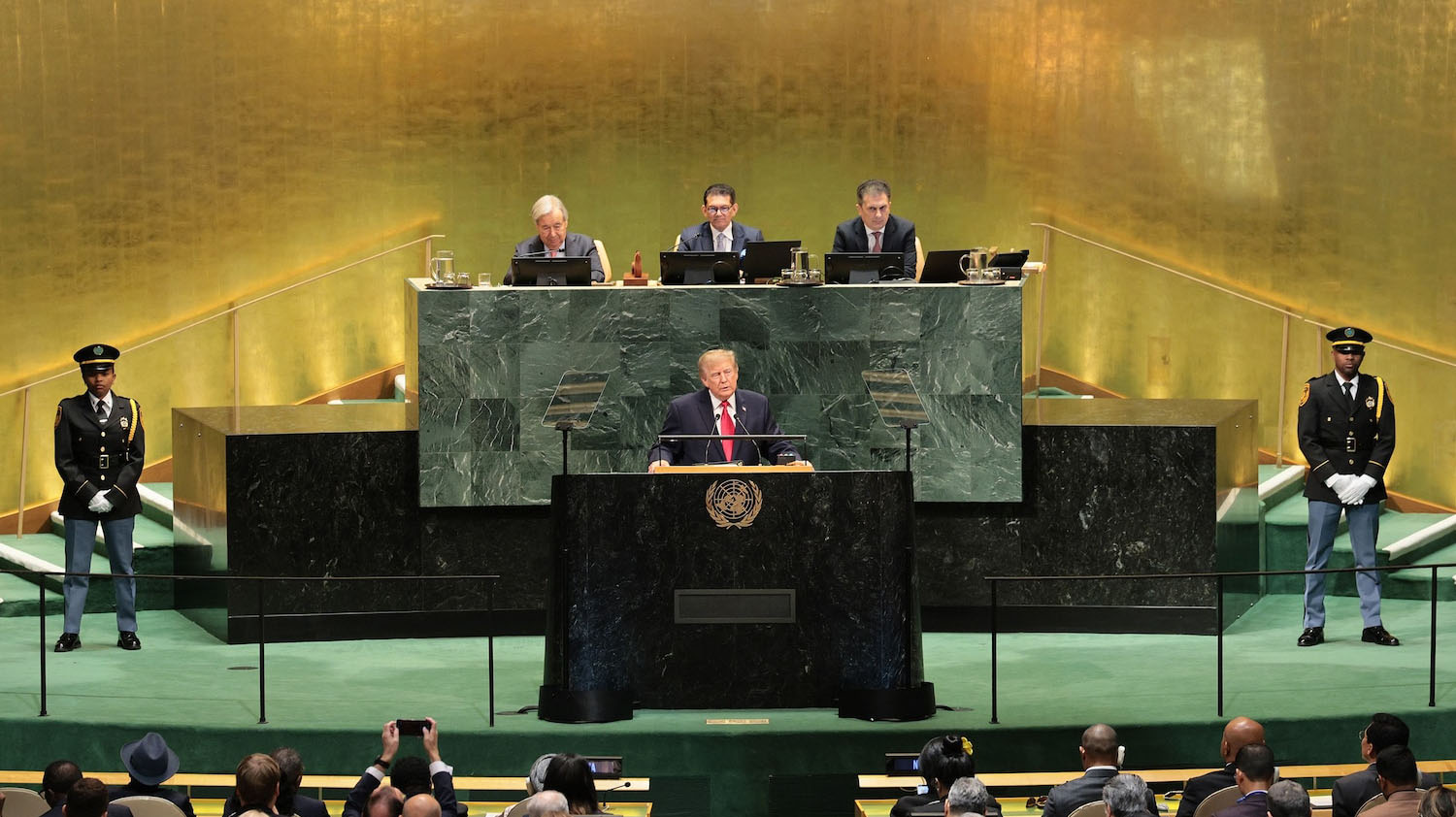

Senate committee votes to hold Fauci in contempt of Congress

Former NIH Director Anthony Fauci testifies before the Senate Homeland Security and Governmental Affairs Committee hearing on July 29, 2026, in Washington, D.C. (Photo by Anna Moneymaker/Getty Images)

(WASHINGTON) -- Republicans on the Senate Homeland Security and Governmental Affairs Committee on Thursday voted to hold Dr. Anthony Fauci in contempt of Congress.

The committee's party-line vote of 8-5 came after Fauci invoked the Fifth Amendment against self-incrimination and declined to answer questions at a hearing last week about his role in handling the COVID-19 pandemic and its origins.

Republican Sen. Rand Paul, the committee's chair, said Fauci could not plead the Fifth Amendment given he was preemptively pardoned by President Joe Biden out of fear of political prosecution.

"We are voting on whether a witness who has received the benefit of a sweeping federal pardon can be ordered by this committee to answer questions and then defy that order without consequence," Paul said ahead of the vote.

David Schertler, legal counsel for Fauci, called Thursday's vote "a crude political stunt intended to punish Dr. Fauci for exercising his constitutional rights."

"The Senate should reject Senator Paul's meritless and politically-motivated contempt resolution," Schertler said in a statement. "For years, Senator Paul has proclaimed to anyone who would listen that Dr. Fauci should be prosecuted and put in prison. Dr. Fauci has committed no crime -- and Senator Paul knows it."

Democrats on the Senate Homeland Security and Governmental Affairs Committee attempted several times to table the contempt resolution but were unsuccessful.

A contempt resolution would normally now head to the full Senate, where it would require 60 votes. It is unlikely the Fauci resolution would receive enough support in the full Senate to pass.

But Paul told reporters he is opting instead to immediately send it to the Department of Justice in the hopes they'll take action. It's unclear how the Department of Justice will respond.

"We will hand deliver it today to the attorney general, and we will hand deliver it today to the District of Columbia to the U.S. Attorney there, and from there we'll find out. But this way, we don't sit a month waiting to determine whether or not we bring it to the Senate floor," Paul said.

Democratic Sen. Gary Peters, the committee's ranking member, criticized the vote and the "damaging precedent" it sets, saying this "could harm our ability to conduct future investigations and disregards constitutional protections long recognized by the U.S. Senate."

"This resolution will not provide the committee with any additional information, or compel Dr. Fauci to provide answers to our inquiries. Criminal contempt is punitive; it does not compel a witness to answer questions or produce the documents we'd all like to see," Peters said.

Peters also condemned Paul's suggestion of referring the contempt resolution directly to the Department of Justice after the vote, saying "that would be even more dangerous and widely unprecedented move."

Copyright © 2026, ABC Audio. All rights reserved.
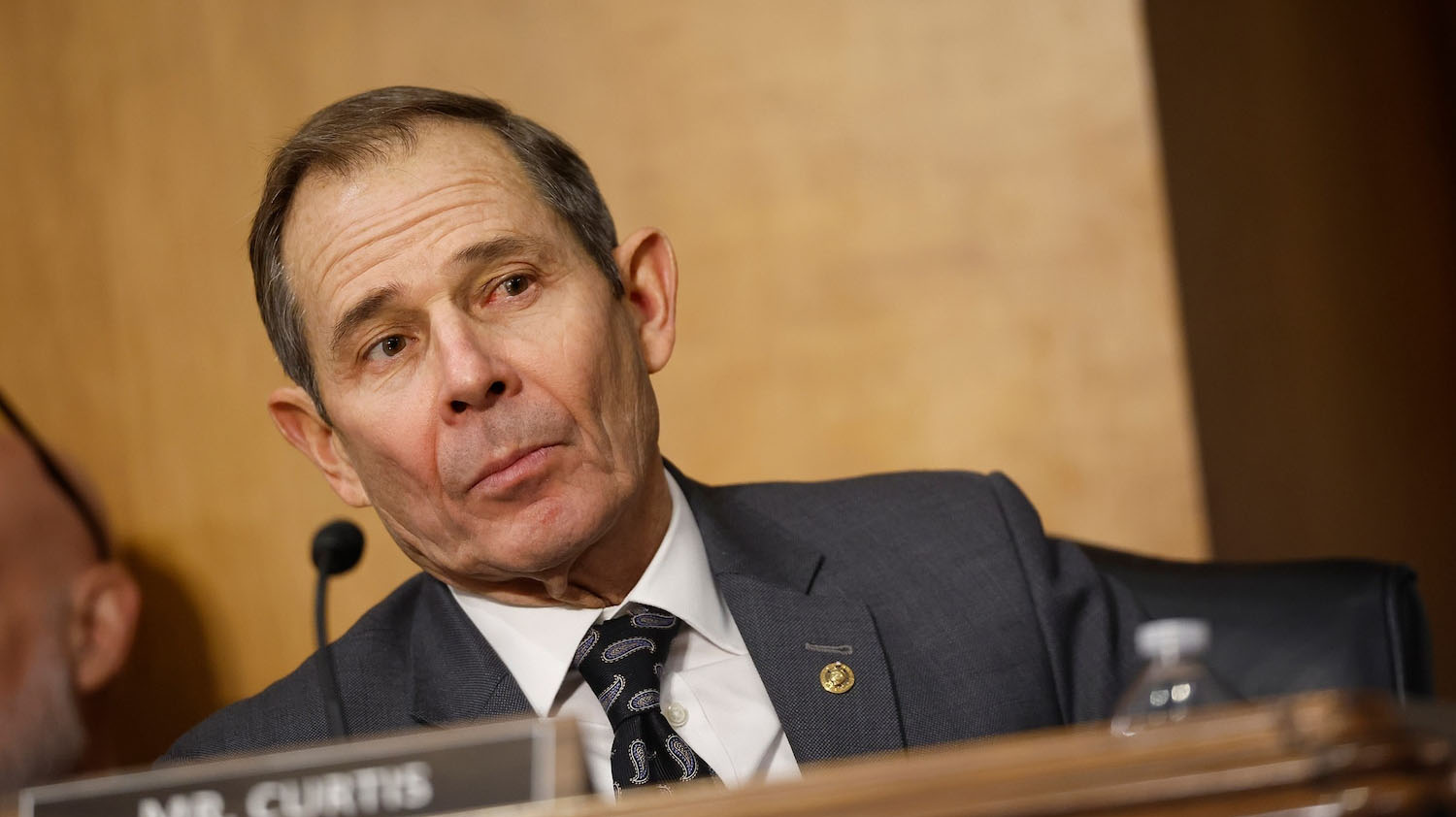

'No final decision' on future of Qatar-donated Air Force One after Trump's term, White House official says

VC-25B Bridge, an interim Air Force One presidential aircraft, stands ready on the tarmac on Aug. 4, 2026, in Joint Base Andrews, Maryland. The "bridge" aircraft, a $400 million gift from Qatar, is a modified Boeing 747-8 that bridges the gap until fully customized long-term replacement Air Force One planes are completed.

(WASHINGTON) -- "No final decision has been made yet" about the future of the new Air Force One jet donated by Qatar following President Donald Trump's second term, a White House official told ABC News.

Trump has pledged for more a year that the new Air Force One, a Boeing 747-8 that was given to the president in a controversial move, would be transferred to his presidential library after his term concluded.

Sources familiar with the proposed arrangement have previously told ABC News that ownership of the plane will be transferred shortly before Trump leaves office to the Donald J. Trump Presidential Library Foundation.

Questions about the president's plans for the plane remain -- including whether Trump would keep it for personal use, if he would leave it for the next president as part of the Air Force One fleet, or if there are other plans in store. 

The gifted plane has long been expected to be used as the new Air Force One until shortly before Trump leaves office, at which time ownership of the plane will be transferred to the Donald J. Trump Presidential Library Foundation, sources familiar with the proposed arrangement have previously told ABC News.

The White House official's comments on Wednesday followed reports from NBC News and The New York Times that called into question the fate of the plane.

Trump's son Eric Trump reportedly told NBC News in a text message that it was "not the plan" for the jet to be delivered to the library. "No. That's not the plan at the moment for Miami," he reportedly texted the outlet. 

Eric Trump, who is involved in developing his father's presidential library in Miami, suggested that an older decommissioned Air Force One jet would instead be going to the library, not the Qatari-gifted one, NBC News reported.

The Qatari royal family's donation of the luxury jet valued at approximately $400 million, an unprecedented foreign gift, raised questions from some lawmakers and ethics experts.

The Air Force last year originally estimated it would cost less than $400 million to retrofit the plane to meet stringent security standards, though it's unclear how much exactly has been spent so far.

Prior to the jet's first presidential flight in July, the U.S. Air Force said it had been modifying the jet Texas since September to meet the security, communications and other needs to transport the president. Many of the details of the retrofitting on the new plane are considered classified.

Trump in July said plane would be further "maxed out" with security features, undergoing an upgrade that was expected to put it out of commission for about a month in the near future.

Those comments came after the plane carried Trump to July's NATO summit in Turkey. As Trump prepared to depart the summit, the Secret Service urged the president to take the older Air Force One jet as a precaution, due in part for the differences in security capabilities, ABC News learned at the time.

When asked in May 2025 by ABC News' Rachel Scott about the future of the plane, the president said it would be sent "directly" to his presidential library after he leaves office, adding, "I wouldn't be using it, no."

Trump repeatedly referenced former President Ronald Reagan's library as a model for his own. A Boeing 707 Air Force One jet was retired to the Ronald Reagan Presidential Library in Simi Valley, California, in 2001.

"Someday, it will be like Ronald Reagan, they decommission them," Trump said during the May 2025 event. "You know, they get to a certain age, they decommission them. It'll go to my library. They're talking about going to my library in years out."

ABC News' Rachel Scott contributed to this report.

Copyright © 2026, ABC Audio. All rights reserved.


Trump calls Rep. Max Miller to express concerns over his reelection bid amid domestic abuse allegations, sources say

Rep. Max Miller (R-OH) leaves a House Republican Caucus meeting on Capitol Hill on Nov. 19, 2024, in Washington, D.C. (Andrew Harnik/Getty Images)

(WASHINGTON) -- President Donald Trump called Rep. Max Miller on Monday and raised concerns about his reelection bid following domestic abuse allegations, two sources tell ABC News.

Police reports obtained by ABC News show that Miller's ex-wife, Emily Moreno, the daughter of Sen. Bernie Moreno, alleged multiple incidents of physical violence during their marriage and divorce proceedings. Miller, a Republican seeking another term representing Ohio's 7th Congressional District, has denied the allegations.

During his phone conversation with Trump, Miller denied the allegations to the president and showed no interest in leaving the race, sources said.

Miller's office didn't immediately respond to a request for comment on the phone call. The White House didn't immediately respond to a request for comment.

On Monday, prior to the phone call, Trump called Miller a "good person" and said he was going to "let the families figure that out" when asked about the allegations.

Miller, a former Trump White House aide, was married to Emily Moreno from 2022 to 2024 and the two have one child, a 2-year-old daughter. The couple married at Trump's Bedminster, New Jersey, club at a ceremony that included a toast by Trump.

The police reports obtained by ABC News also show Emily Moreno told the police that her daughter received physical injuries while in Miller's care. Miller denies abusing his wife or daughter. He was never charged with a crime and the Department of Children and Family Services did not find evidence to substantiate allegations of child abuse, according to records released in court filings.

Miller faces a Wednesday deadline to drop out in order to be replaced on the ballot.

He is facing growing scrutiny — including from his former father-in-law, who said on Monday that Miller "should not serve in the House" — and is lashing out on social media at senators who support him stepping aside.

According to report by Politico, those Republican senators include Sen. Shelley Moore Capito of West Virginia and Sen. Roger Marshall of Kansas.

Miller responded on social media late on Monday, specifically addressing Capito, who told Politico she supports Moreno’s position.

Miller replied, "@SenCapito here's the facts: 1. Every accusation that has been thrown my way has been found unsubstantiated by the court system as well as mine and my ex-wife's court appointed mediator (who is a psychologist and mandatory reporter). Let me know if you want me to read the rest of the files to you."

He did not address Marshall’s comments to Politico. Marshall told the news outlet that Miller "should resign. He should quit."

A lawyer for former White House press secretary Stephanie Grisham separately announced on social media on Monday evening that he has "filed for a Temporary Restraining Order against Cong. Max Miller (R-OH) on behalf of former Trump Press Secretary Stephanie Grisham."

Grisham is currently suing Miller over violations of the terms of a confidential settlement related to his defamation case against her. She alleged that he abused her during their romantic relationship during the first Trump administration. Miller has denied her allegations of abuse.

The White House declined to comment last week on allegations of abuse by Miller toward Grisham or Moreno.

Copyright © 2026, ABC Audio. All rights reserved.


Key Republicans say they'll support Blanche for AG after he rescinds 'Anti-Weaponization Fund'

Acting Attorney General Todd Blanche attends a Cabinet Meeting at Camp Davaid, the presidential retreat, July 31, 2026, in Camp David, Maryland. (Anna Moneymaker/Getty Images)

(WASHINGTON) — Under pressure from two Republican senators blocking his confirmation as the next attorney general, Todd Blanche said he is formally rescinding his establishment of President Donald Trump's so-called "Anti-Weaponization Fund."

Blanche posted two separate orders on X Sunday night, one rescinding the nearly $1.8 billion fund, as well as another clarifying language regarding the scope of an arrangement that had shielded Trump from facing further IRS audits of his past tax returns.

The move prompted Republican Sens. John Cornyn and Thom Tillis, who had been holding up Blanche's nomination, to announce Monday that they are ready to move forward.

The Senate Judiciary Committee is scheduled to vote on Blanche's nomination on Tuesday at 9 a.m. Blanche will likely need the support of every Republican on the committee to advance to the floor.

He is expected to be voted out of committee, setting up a final confirmation vote later this week.

"We are pleased that the Department of Justice has issued a formal order terminating the anti-weaponization fund," Cornyn and Tillis said in a joint statement. "Additionally, the Department has acknowledged in a binding written order that the audit settlement is limited to the plaintiffs and the scope does not extend beyond the defendants in the lawsuit, the IRS and the Treasury, addressing concerns that multiple of our Republican colleagues share."

"We want to express our gratitude to Mr. Blanche and his staff for working with us on this, and we look forward to voting to advance his nomination out of the Senate Judiciary Committee soon," they said.

As part of Trump's settlement with the IRS in his $10 billion lawsuit against the agency, the DOJ issued an addendum, signed by Blanche in his role as acting attorney general, that would bar the government from continuing any existing audits of tax returns filed by Trump, his family and their companies.

Cornyn said last week that he did need the DOJ to modify the language of the settlement, but that he wants written documentation that the settlement won't provide tax audit immunity that extends to affiliated organizations for Trump and his family that weren't part of the lawsuit.

Blanche's post on Sunday is a signal that he had secured approval from Sens. John Cornyn and Thom Tillis, who had been key holdouts on his nomination. The GOP senators had been working behind closed doors and in private talks with Blanche and his team to craft statements they’d find acceptable to alter the language of the controversial settlement. 

"Sen. Cornyn has reached an agreement with the Department of Justice, which will be issuing a formal order permanently terminating the anti-weaponization fund and making clear in a binding written document that the scope of the audit settlement is limited to only the plaintiffs, including the President, and the IRS," Cornyn spokesperson Natalie Yezbick said in a statement late on Sunday.

Some legal experts and even MAGA supporters of the fund, however, have already begun questioning whether it precludes DOJ from giving mass payouts to pro-Trump rioters or the clarification that Cornyn had initially sought to the IRS immunity clause.

The order dealing with IRS immunity notably states that DOJ would interpret the order to mean that it only applies to plaintiffs in Trump and his son’s initial $10 billion lawsuit against the IRS -- but that interpretation doesn’t appear to be similarly binding on Trump’s personal lawyers or his family.

And some previous vocal supporters of the so-called "Anti-Weaponization Fund" are already cheering on the language of the order rescinding it -- noting that there’s nothing specifically barring DOJ from payouts to pro-Trump supporters who may have attacked police during the Jan. 6, 2021, attack on the Capitol.

Blanche's orders on Sunday come after Trump floated the possibility of temporarily withdrawing Blanche's nomination to permanently lead the Department of Justice because of the resistance from the two outgoing Republican senators.

Both senators' terms will end in January. Cornyn lost a primary battle in Texas earlier this year after Trump endorsed his opponent, Ken Paxton. Tillis announced last year he would not seek reelection after Trump threatened to field primary challengers.

Withdrawing Blanche's nomination is a decision that would have no consequence in terms of Blanche leading the DOJ.

Blanche can continue to serve as acting attorney general. Acting department officials can serve in the role for 210 days, according to the Federal Vacancies Reform Act -- however, that resets if a nomination is withdrawn.

Copyright © 2026, ABC Audio. All rights reserved.


Ohio Rep. Max Miller's reelection bid faces questions after domestic abuse allegations

Rep. Max Miller, R-Ohio, attends the Ways and Means Committee hearing on the priorities of the Treasury Department in Longworth building on Thursday, June 4, 2026. Treasury Secretary Scott Bessent testified. (Tom Williams/CQ-Roll Call, Inc via Getty Images)

(WASHINGTON) -- Ohio congressman Max Miller is denying allegations of domestic abuse made by his ex-wife.

Police reports obtained by ABC News show that Miller's ex-wife, Emily Moreno, the daughter of Sen. Bernie Moreno, alleged multiple incidents of physical violence during their marriage and divorce proceedings. The allegations come amid Miller’s reelection bid for what is seen as a safe Republican seat and have led to calls from some Democratic members of Congress for an ethics investigation and resignation.

Miller, a former Trump White House aide, was married to Emily Moreno from 2022 to 2024 and the two have one child, a 2-year-old daughter.  The couple married at Trump's Mar-a-Lago estate at a ceremony that included a toast by President Donald Trump.

In the police reports, Moreno told police officers that Miller "threw her against the wall, which resulted in an obvious grab mark on her upper arm" and had previously "held a gun to her head" and threw hot water on her. According to the police report, Moreno also recounts her child telling her "Daddy kill you."

Additionally, the report shows Moreno told the police that her daughter received physical injuries while in Miller's care.

Miller, who represents Ohio's 7th District, was never charged with a crime and the Department of Children and Family Services did not find evidence to substantiate allegations of child abuse, according to records released in court filings.

Miller denies abusing his wife or daughter. In a defamation lawsuit against his ex-wife, he has argued that this is a "repeated pattern" of false accusations by his wife meant "to ruin my reputation, gain an edge in custody and litigation matters, and seek revenge."

Prior allegations against Miller

This is not the first time Miller has been accused of violence against women. Former White House press Secretary Stephanie Grisham alleged in her 2021 memoir that she had been physically abused by her partner while working at the White House.

She later identified that man as Miller in a Washington Post op-ed. She claims that she told White House officials at the time about the alleged abuse and they failed to take action.

The White House declined to comment on allegations of abuse by Miller towards Grisham or Moreno.

Miller's office directed ABC News to Miller's past social media posts denying the alleged abuse and attacking past reporting on the case.

Miller denied Grisham's allegations and sued her for defamation while running for Congress in 2023. They reached a confidential settlement. Grisham is now suing Miller for violating the terms of their settlement by discussing the case in his denials of the allegations by Moreno.

Lawyers for Emily Moreno on Thursday applied for a restraining order against Miller, citing "harassment and threats" by the congressman against the legal team.

Lawyers for Moreno have not replied to requests for comment.

Miller has gone after his Republican colleague and ex-father in law Sen. Bernie Moreno publicly, posting on X in May: "It is unfortunate that @berniemoreno continues to fund and enable his daughter's malicious campaign to ruin my life despite his knowledge of her mental health issues. Bernie, this must be distracting from your job. These antics harm your own grandchild. Anytime you want to put a stop to this, you can."  

A spokesperson for the senator told The Washington Post that Moreno's "top priority is the safety and well-being of his daughter and granddaughter." The statement added: "While he does not litigate these matters in the media or respond to baseless public attacks, he will do whatever it takes to ensure a just outcome for his family."

Miller is facing off against Democrat Brian Poindexter, a union iron worker, in November. Poindexter's campaign did not respond to ABC's requests for comment.

Last month, Cook Political Report changed the race's ranking from "Solid Republican" to "Likely Republican" shortly after internal polling found Democratic challenger Poindexter trailing Miller by just one point.

Miller won the district with only 51% of the vote in 2024, largely due to a credible third party candidate. Trump won the district with 55% of the vote in 2024.

While his opponent has not made the allegations against Miller central to his campaign as of yet, outside groups have stepped in to elevate the accusations.

The pro-labor Battleground Alliance PAC conducted robocalls to roughly 100,000 households last month recounting Moreno and Grisham's claims. A spokesperson for the PAC did not reply to ABC News' requests for comment.

The Republican National Congressional Committee declined to comment on the specific allegations against Miller and as a rule does not comment on spending decisions.

The House Majority PAC, which helps elect Democrats, told ABC it is "willing to do whatever it takes to take back the House, and nothing is off the table. Democrats are expanding the map deeper into Trump territory by the day, and Brian Poindexter will defeat the scandal plagued Max Miller."

They did not specifically respond to a question about planned spending to support Poindexter in that race.

'Troubling accusations' and calls for investigation

Ohio Gov. Mike DeWine was asked about the allegations on Thursday by ABC"s Cleveland affiliate and said that they were "troubling accusations" and that "people of the district are having to weigh the facts."

Ohio Democratic Rep. Shontel Brown, who represents the neighboring 11th District, called on Miller to resign.

Miller is hardly the only member of Congress to attract attention for allegations of misconduct towards women this year alone. Reps. Eric Swalwell and Tony Gonzales departed congress this year amid allegations of misconduct with aides.  

Rep. Cory Mills, R-Fla., remains under a House ethics investigation for a range of allegations, including domestic violence by a former partner. He denies all allegations of misconduct.

House Speaker Mike Johnson was asked about the allegations against Miller and Mills at a press conference last week and said: "Well, the key word there is allegation. We have a process here. The House Ethics Committee works on those things. If allegations are made, they work through a process. So I I'm not in the business of commenting on investigations as they as they're in process, and we'll see how that shakes out."

At least one member of Congress has called for an ethics investigation into Miller. Democratic Congressman Sam Liccardo of California posted on X: "Allegations that Max Miller abused his wife and child demand an immediate House Ethics Committee investigation. Congress must never serve as a safe harbor for abusers."

The House Ethics Committee declined to comment on the allegations against Miller and whether there is an active investigation by the committee into his conduct.

Copyright © 2026, ABC Audio. All rights reserved.
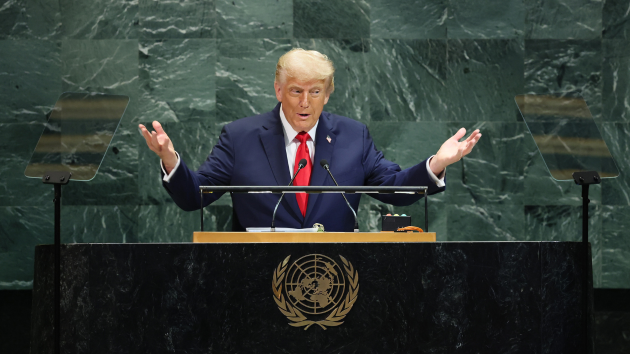

Trump floats temporarily withdrawing Blanche's AG nomination over GOP holdouts

Senate Finance Committee Chairman Charles Grassley (R-IA), Sen. John Cornyn (R-TX) and Senate Majority Leader John Thune (R-SD) attend a Finance Committee hearing on July 30, 2026, in Washington, DC. Cornyn is withholding support for President Donald Trump's nominee for U.S. attorney general, Todd Blanche, until he gets reassurances on Trump’s IRS lawsuit settlement and the elimination of the “anti-weaponization fund." (Photo by Win McNamee/Getty Images)

(WASHINGTON) -- President Donald Trump on Thursday floated the possibility of temporarily withdrawing Todd Blanche's nomination for attorney general as his confirmation is being held up by two outgoing Republican senators.

"Todd Blanche is a STAR, and everyone knows it! He has the potential to go down as one of the Greatest Attorney Generals of All Time. However, John Cornyn, of Texas, and Thom Tillis, of North Carolina, both of whom I refused to Endorse, and whose political careers have been ended by my action, are refusing to vote for this Great Nominee, who will remain, in any event, as Acting," Trump wrote in a social media post.

"I have no objection to temporarily withdrawing Todd’s name, if they do not do the right thing, and putting him back after Cornyn and Tillis are out of office," Trump wrote.

Both senators' terms will end in January. Cornyn lost a primary battle in Texas earlier this year after Trump endorsed his opponent, Ken Paxton. Tillis announced last year he would not seek reelection after Trump threatened to field primary challengers.

Cornyn, in response to Trump's social media post, suggested that, in addition to him and Tillis, there are more lawmakers with "concerns" regarding Blanche.

"POTUS is mistaken if he believes concerns about the provisions in his tax lawsuit settlement are limited to me and Senator Tillis," Cornyn wrote on X. 

Cornyn is demanding the Department of Justice put in writing that the nearly $1.8 billion so-called "Anti-Weaponization Fund" is officially dead, and that the scope of Trump's immunity deal with the IRS be narrowed.

As part of Trump's settlement with the IRS in his $10 billion lawsuit against the agency, the DOJ issued an addendum, signed by Blanche in his role as acting attorney general, that would bar the government from continuing any existing audits of tax returns filed by Trump, his family and their companies.

"I know that Todd Blanche understands it, but I think he's probably getting some pushback from the White House, and that's making things more complicated than there needs to be," Cornyn told ABC News on Thursday morning.

Cornyn said he wanted the DOJ to rewrite the IRS settlement agreement itself and said they were "reluctant” to do so. Cornyn then said he offered them an alternative.

"So we provided some additional paper…which, if he would put that in writing, would satisfy my concerns because he said the weaponization fund is dead. He said the audit protections don't extend beyond the parties in the lawsuit, and it doesn't cover any federal entities," the senator said.

When asked by a reporter if the DOJ committed to doing that, Cornyn said "no."

"I don't know whether they think they can wait us out or we’ll cave, but I assure you, we won't," Cornyn said.

Tillis said the administration could "roll the dice" and wait out his and Cornyn's Senate terms, but said Trump is getting bad advice on how to proceed with Blanche's nomination.

"Hey, 158 days they can try it again, roll the dice on what the Senate confirmation process looks like next year. It’s all on him. It’s certainly within his authority to do that," Tillis said.

The Senate Judiciary Committee postponed its scheduled Thursday vote on Blanche's nomination for attorney general amid the resistance from Cornyn and Tillis.

Sources told ABC News that DOJ sent an updated proposal to the two senators last night to try and quell their concerns. 

But when we asked on Thursday morning whether Wednesday night’s proposal moved him any closer to voting for Blanche, Cornyn responded, "We are no closer than we were before."

Withdrawing Blanche's nomination is a decision that would have no consequence in terms of Blanche leading the DOJ. Blanche can continue to serve as acting attorney general.

Acting department officials can serve in the role for 210 days, according to the Federal Vacancies Reform Act -- however, that resets if a nomination is withdrawn.

Copyright © 2026, ABC Audio. All rights reserved.

Republican senators vow Fauci contempt vote after hearing on COVID-19 origins

Former NIH Director Anthony Fauci testifies to Senate Homeland Security and Governmental Affairs Committee hearing on July 29, 2026, in Washington, D.C. (Photo by Kevin Dietsch/Getty Images)

(WASHINGTON) -- Republican senators vowed to vote next week on holding Dr. Anthony Fauci in contempt of Congress after he declined to answer a barrage of questions at a hearing Wednesday about his role in handling the COVID-19 pandemic. 

Fauci, the former director of the National Institute of Allergy and Infectious Diseases (NIAID), repeatedly invoked the Fifth Amendment during the hearing before the Senate's Homeland Security and Governmental Affairs Committee (HSGAC).

Sen. Rand Paul, R-Ky., the committee chairman who has led investigations into Fauci, said after the hearing that he wanted courts to assess whether Fauci could plead the Fifth Amendment given he was pre-emptively pardoned by President Joe Biden out of fear of political prosecution.

Paul has long accused Fauci of deceiving Americans about the origins of the COVID-19 pandemic.

Fauci said in his opening statement that he would refrain from answering questions under the advice of his attorneys. "It pains me to do so because of the respect that I have for the legislative branch of government and my decades-long record of cooperating with Congress," he said.

Fauci said he testified before or briefed congressional committees over 200 times in his 38 years as director of the National Institute of Allergy and Infectious Diseases.

"Given Sen. Paul's obvious obsession with calling for my prosecution, his repeated slanderous comments about me, and recently his publicly releasing my unredacted personal diary aimed at embarrassing and intimidating me, the only conclusion I can reach is that the sole reason he is calling me before this Committee is to get me to say something, anything that could vindicate his repeated public pledges that I end up, in his words, 'behind bars,'" Fauci said.

Paul focused his questioning on Fauci's personal journal entries between December 2019 and December 2022, as well as the origins of COVID-19, but Fauci declined to answer the questions.

Over the weekend, Paul released a tranche of Fauci's journal entries -- a more than 1,100-page document -- revealing his inner thoughts about the origins of COVID, a detailed log of events within the White House situation and press briefing rooms, and his myriad media appearances about the response to COVID-19 and other health outbreaks.

One of Fauci's attorneys, David Schertler, who was sitting next to him, attempted to speak several times after Paul's questioning was over, but the senator shut him down, saying the attorney wasn't recognized.

"You were told not to sit at the table, you insist on sitting at the table, and we told you you would not be recognized," Paul said to the attorney. "You are not invited here for testimony, sir. ... Would you behave this way in a courtroom? No, 'cause the judge would put you in jail. I can't do that today, but I can have you escorted from the premises."

After about another minute, Paul called for security and Capitol Police had Schertler escorted from the room.

Republicans on the committee hammered Fauci over entries in his journal that they claim show he contradicted himself and sought personal fame. 

Sen. Ron Johnson, R-Wis., sounding incredulous, said that Fauci lied to his own diary when Fauci wrote that he was never shown a March 2020 re-opening plan sent to governors by President Donald Trump. 

"So I'm just simply asking you: Is that true? Did you literally lie to your own diary? Did you know of that letter sent out to governors about reopening county by county?" Johnson said.

Fauci again invoked his Fifth Amendment rights.

Other Republican senators, including James Lankford of Oklahoma, asked Fauci about the theory that the COVID-19 virus originated in a laboratory, but the doctor declined to answer questions.

In a December 2024 letter to the staff director for the House Select Subcommittee on the Coronavirus Pandemic, Schertler said Fauci has never characterized the lab-leak theory as a conspiracy theory but that the discussion around the lab-leak theory has been "rife" with conspiracy theories.

Democrats on the committee defended Fauci's right to plead the Fifth and thanked him for his years of service. They used their time to condemn the hearing as a fishing expedition -- and one that distracted the committee from more pressing public health concerns like the current U.S. measles outbreak and affordable health care.

"That's what I wish we were trying to address in a bipartisan way," Sen. Maggie Hassan, D-N.H., said. "But instead we are here in an attempt to entrap you, because you had a distinguished career trying to put Americans' public health first."

Ranking member Sen. Gary Peters, D-Mich., decried the hearing as counterproductive, saying the attacks on Fauci would deter others from engaging in the work necessary to protect from public health crises. 

"I think today's hearing, unfortunately, does real damage," Peters said. "It's tempting to turn one person into the scapegoat for a crisis that hundreds of officials across both the Trump and the Biden administration were responsible for handling."

Sen. Richard Blumenthal, D-Conn., referred to the pandemic as some of the "darkest days or times in our history" and said Republicans were attempting to "rebrand" Fauci as a "villain."

"Dr. Fauci is just one part of this larger campaign against science and facts -- a campaign that has made Americans less safe," Blumenthal said. "It is shameful that a dedicated public servant like Dr. Fauci has experienced persistent threats to his life since the pandemic because of the lies that are told about him."

ABC News' Sony Salzman contributed to this report.

Copyright © 2026, ABC Audio. All rights reserved.

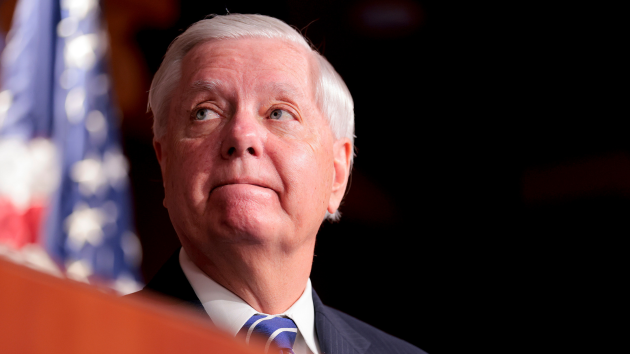
A true American original': Trump eulogizes Sen. Lindsey Graham at Washington funeral

U.S. Sen. Lindsey Graham (R-SC) speaks during a press conference at the U.S. Capitol on April 27, 2026, in Washington, DC. Republican senators gathered to introduce legislation to fund construction of a White House ballroom as a secure alternative event space following the shooting at the White House Correspondents’ Association dinner in Washington, DC Saturday night. (Photo by Heather Diehl/Getty Images)

(WASHINGTON) -- National political leaders and prominent figures from around the globe are remembering South Carolina Republican Sen. Lindsey Graham with a ceremony on Capitol Hill and a funeral service in Washington, D.C., on Tuesday.

President Donald Trump paid tribute to his close ally at Washington National Cathedral on Tuesday afternoon.

"Today, we gather in the deepest gratitude and profoundest sorrow to honor a beloved friend, a devoted brother, a respected statesman, a giant of the United States Senate and a true American original who left us much too soon," Trump said. "And that can only be the one and only Lindsey Graham."

The cathedral funeral is being attended by a number of world leaders, including Israeli Prime Minister Benjamin Netanyahu and Ukrainian President Volodymyr Zelenskyy. Graham worked closely with both men as a staunch ally to both nations. Graham spent some of his final days in Ukraine and met with Zelenskyy just before he died.

Sean Hannity and Graham's niece, Emillie Boggs Roberts, will also deliver remarks.

Graham first was recognized with a ceremony in the Capitol rotunda Tuesday morning. His casket, draped in an American flag, was escorted by Air Force personnel and received by members of his family, including his sister Sen. Darline Graham, on the Capitol steps.

A great number of senators, both Democrats and Republicans, were in attendance. Senate Majority Leader John Thune and Vice President JD Vance gave remarks, as did South Carolina Republican Rep. Sheri Briggs.

Thune remembered Graham for his work in national security and defense, his efforts on the Senate Judiciary Committee and for his commitment to pro-life issues.

Thune seemed to choke back tears toward the ends of his remarks as he said a final goodbye to Graham.

"To Lindsey, rest in peace, my friend. I look forward to the days when you make us all laugh again," he said.

Vance said he will remember Graham as someone who would fight alongside you on issues you both care about while respectfully disagreeing on others, and shared a story of an "intense argument" they had over Ukraine, but that it didn't stop Graham from supporting him on another issue.

"I choose to remember Lindsey Graham as a person who could fight with you on one issue, but fight for you on another issue," the vice president said. "I remember Lindsey Graham as a man who loved people, and because he loved people, he was willing to reason with them, to respect them, and ultimately to persuade them."

"It was impossible not to like him -- that swashbuckling, infectious laugh, that attitude, that passion that so many others have talked about. Lindsey Graham was impossible not to like as a human being, and of course, as a United States senator," Vance added in his speech.

Graham served more than two decades in the Senate, becoming one of the chamber's most recognizable Republicans and one of Trump's closest friends and advisers. He advised the president on foreign matters, including the recent war in Iran, and was a prominent fixture of the Senate's powerful Judiciary Committee.

He died suddenly and unexpectedly on July 11 at the age of 71. Preliminary findings from the Medical Examiner of the District of Columbia said that the senator died due to "aortic dissection due to arteriosclerotic cardiovascular disease."

Graham's casket will return to South Carolina on Wednesday, where further memorial services are set for Columbia, the state's capital, and Pickens County, where Graham grew up and part of the district he represented.

The U.S. Air Force will rename Joint Base Charleston in South Carolina for Graham, a White House official confirmed on Tuesday.

The base, which falls under the command of the United States Air Force's 628th Air Base Wing, will be renamed to Joint Base Lindsey Graham, according to a memorandum from Secretary of the Air Force Troy Meink dated July 27.

In the memo obtained by ABC News, Meink said that the renaming would honor "Graham's decades of distinguished service to the United States Congress and the United States Air Force." It was not immediately clear when the change would go into effect.

Copyright © 2026, ABC Audio. All rights reserved.

Kentucky governor calls on McConnell to 'verbally address' Kentuckians or resign

Kentucky Democratic Gov. Andy Beshear speaks at the 38th Annual Michigan Democratic Women's Caucus Legacy Luncheon on April 18, 2026 in Detroit, Michigan. (Photo by Bill Pugliano/Getty Images)

(NEW YORK) -- Kentucky Gov. Andy Beshear called on Monday for Sen. Mitch McConnell to either "verbally" show proof to Kentuckians that he can still serve in the Senate or to resign from Congress.

"Important events are happening in our country right now during your absence," Beshear, a Democrat, wrote in a letter to the Republican senator, according to a copy obtained by ABC News.

McConnell has been hospitalized since June 14, according to his office, which said on July 12 that the 84-year-old senator was recovering from a fall that left him briefly unconscious. He also had to deal with a "mild case of pneumonia," his office said.

"President [Donald] Trump is stuck in a war of his own making and has greatly strengthened the very country he claims is a threat," Beshear wrote. "Prices continue to rise, crushing Americans who are working hard but not getting ahead. Americans' voting rights are being eliminated by the Supreme Court and threatened by congressional action. All while you are absent and refuse to communicate clearly and directly to the people you serve."

"As Governor of the state you serve, I am calling on you to directly and verbally address the people of Kentucky and provide proof of your capacity to serve, or resign," he added.

ABC News reached out to McConnell's office for comment, but didn't immediately receive a response.

The letter followed a statement issued on Monday by McConnell's office, in which the senator said he would miss an upcoming Kentucky political event in order to continue his rehabilitation.

"I’m still working hard to get back to my full schedule of work in the Senate and in Kentucky, keeping up with intense physical therapy per my doctors’ orders," McConnell said in the statement.

McConnell's office also included a new image of the senator and his wife, Elaine Chao, that it said was taken on Sunday, July 26.

Beshear on Monday also sent a separate letter to Senate Majority Leader John Thune, calling on Thune to investigate McConnell’s condition and, if McConnell does not show he can continue serving in the Senate, to begin the process of potentially expelling McConnell from the chamber.

"Per our research, a vacancy in the Senate occurs when a senator dies, resigns, or is expelled by a vote of the Senate itself," Beshear wrote in the letter to Thune. "If Senator McConnell is unwilling to voluntarily show that he still has the capacity to serve, I will insist that you as the Majority Leader of the Senate fully investigate his condition, report to the American people, and begin the process if warranted."

Beshear as governor does not have the authority to alter McConnell’s standing in the Senate. If McConnell’s seat were to become vacant, Beshear would likely have to set up a special election to fill it.

Kentucky lawmakers previously passed legislation that blocked the governor from having the ability to appoint a temporary replacement.

Copyright © 2026, ABC Audio. All rights reserved.

McConnell still in rehabilitation facility, will miss upcoming Kentucky political event, his office says

Senator Mitch McConnell and Secretary Elaine Chao, July 26, 2026. (Courtesy of Sen. Mitch McConnell)

(WASHINGTON) -- Sen. Mitch McConnell's office issued a statement from the Republican senator on Monday saying that he will miss an upcoming Kentucky political event in order to continue his rehabilitation following a June 14 fall that left him hospitalized.

"I’m still working hard to get back to my full schedule of work in the Senate and in Kentucky, keeping up with intense physical therapy per my doctors’ orders. Unfortunately, that means I won’t be able to make it to Fancy Farm, Kentucky this Saturday," McConnell said in the statement of the political event and cookout held annually in Kentucky.

"As always, I appreciate all of your continued well wishes, and I’m looking forward to getting back to the Senate and to Kentucky soon."

An additional statement from the Office of the Attending Physician says that McConnell is continuing with a course of physical therapy and rehabilitation, adding that he is "not yet medically cleared to leave the rehab facility and return to the office."

"Since his discharge from hospital care, he has maintained a strenuous course of physical therapy and rehabilitation, including multiple sessions a day designed to rebuild strength and reduce the risk of future falls," the OAP statement reads.

McConnell's office also included a new image of the senator and his wife, Elaine Chao, that it says was taken on Sunday, July 26.

McConnell was hospitalized on June 14, though his team initially released few details about the incident -- prompting calls from many, including Kentucky Gov. Andy Beshear, for more transparency.

In a statement issued July 12, nearly a month after his hospitalization, McConnell said he was hospitalized due to a fall that left him briefly unconscious. He also had to deal with a "mild case of pneumonia."

He has not been seen on Capitol Hill since June 11.

McConnell has said he intends to finish his term, which expires in January. The seven-term senator has already said he does not intend to seek reelection in January.

Copyright © 2026, ABC Audio. All rights reserved.


Trump to attend rescheduled White House correspondent's dinner Friday

: (L-R) White House Press Secretary Karoline Leavitt, Melania Trump, U.S. President Donald Trump, and Weijia Jiang attend as Mentalist Oz Pearlman hosts The White House Correspondents Dinner at Washington Hilton on April 25, 2026 in Washington, DC. (Photo by Kevin Mazur/Getty Images for OP)

(WASHINGTON) -- President Donald Trump will attend the rescheduled White House Correspondents' Association Dinner Friday night, the White House said, after the annual dinner ended abruptly three months ago when shots rang out.

"Alongside all of you members of the media, the president looks forward to finishing what he started before a despicable assassination attempt derailed the original event back in April," White House press secretary Karoline Leavitt told reporters on Thursday.

The spring dinner devolved into chaos after authorities say Cole Allen opened fire inside the Washington Hilton hotel, where thousands of journalists and guests gathered for the annual celebration of the First Amendment. The president and top government officials were also in attendance.

Allen pleaded not guilty in May to charges of attempting to assassinate the president, transportation of a firearm with intent to commit a felony, discharge of a firearm during a crime of violence and assaulting a federal officer with a deadly weapon.

Secret Service officer Victor Gonzales was shot in the incident, but the bullet struck "his protective vest and [he] continued responding to the threat," the Secret Service said.

Sean Curran, the Secret Service director, said in a briefing on Wednesday that the agency measures worked in April and that they are preparing for Friday's rescheduled dinner.

Friday's dinner is taking place at a different Washington, D.C., hotel, the Waldorf Astoria on Pennsylvania Avenue.

"We will always evaluate every site and, right now, we have an advance team there and they will take back and they will set up a plan to set that site up for success just like we did at the White House correspondents' dinner at the Hilton," Curran said.

The White House Correspondents' Association announced on Tuesday that it will present a special award, the President's Award for Exceptional Service, during Friday night's dinner to Gonzales and the staff of the Washington Hilton.

"Officer Gonzales played a significant role when he ran toward danger so that thousands of others could make it home safely," Weijia Jiang, who presided over the April dinner as WHCA president, said in a statement. "His courage stemmed from a dedication to service, which we are looking forward to honoring this week."

Jiang said the Hilton staff is being recognized for their "professionalism and commitment to service" by continuing to "take care of guests" after experiencing the "harrowing situation" themselves.

The shooting took place before the scheduled program that features the presentation of journalism awards, remarks from the president, and entertainment from an invited headliner. This year's entertainer was mentalist Oz Pearlman, who will be back for the redo dinner, the association said.

The association added that it was determined "to finish the program that was interrupted."

Copyright © 2026, ABC Audio. All rights reserved.


House passes bill that would ban members from buying stock

New York Stock Exchange (NYSE) in New York, US, on Tuesday, July 14, 2026. (Michael Nagle/Bloomberg via Getty Images)

(WASHINGTON) -- The House on Wednesday passed a bill that would ban members of Congress from trading individual stocks as well as mandate that voters provide photo identification "as a condition of casting a ballot" by a 232-198 vote.

Thirteen Democrats voted with all Republicans in favor of the bill.

The Stop Insider Trading Act, championed by House Administration Committee Chairman Bryan Steil of Wisconsin, would prohibit members of Congress, their spouses and their dependent children from buying new stocks. The bill would, however, allow lawmakers to keep the stocks they already own.

"This is the first congressional stock trading ban to receive a vote on the floor of the House," Steil said on the floor. "If you want to day trade, there is a place for that on Wall Street."

Administration Committee ranking Democrat Joe Morelle of New York called the bill a "sham" because it "allows members of Congress to continue owning and trading stocks."

Rep. Teresa Leger Fernandez of New Mexico, the chair of the Democratic Women's Caucus, told ABC News that the bill wouldn't prevent a member from selling stock they already hold.

"It doesn't ban stock trading because you could still acquire stocks, sell stocks, use information that you have that you garner here in Congress to make a profit. And stock trading involves purchase and sales, and it does not prohibit sales," she said.

Some Democrats opposed the bill in part because they contend it doesn't go far enough to rein in stock trading for the executive branch, including the president and vice president.

"The biggest glaring absence is that the president and vice president can continue to stock trade," Leger Fernandez said.

President Donald Trump's recent financial disclosure report shows his investment advisers made more than 21,000 trades on his behalf last year, many involving companies with business before, or regulated by, his administration.

Republican Rep. Chip Roy of Texas also expressed regret that GOP leadership made the vote a "partisan exercise" by attaching voter ID to the ban and agreed with Democrats who argue the scope of legislation should address all three branches of government.

"It should apply to everybody. That was my preference, and always had been," Roy said. "We stuck on focusing on Congress because you know, get your own house in order, and then you know you can kind of start pointing fingers elsewhere, but I would like it to apply to everybody in the executive branch, judiciary branch, and here."

Other Democrats opposed the bill because it combined the stock ban bill with the voter ID provision as Trump continues to push Republicans in both chambers to pass the SAVE America Act, which Democrats oppose because they say it would disenfranchise some voters.

According to the bill text, that provision requires voters to show a valid physical photo identification when casting a ballot for federal office. Mail-in and absentee voters can attach a photocopy of their ID to their ballot. If an eligible voter forgets to bring their ID to vote, they can cast a provisional ballot.

"They've added provisions that have absolutely nothing to do with stock trading and everything to do with their obsession, their obsession with the 2020 election," Morelle said of the voter ID provision.

Leger Fernandez said the bill amounted to a "Trojan Horse" for the Save America Act.

Rep. Alexandra Ocasio-Cortez of New York called it a "bait-and-switch" bill.

"They attached these voter suppression provisions specifically because they knew it would kill a stock trading ban. I proudly voted no because we are not going to sabotage mail-in voting in this country, and we're not going to fall for, kind of, their bait-and-switch tactic here."

Because of the voter ID language in the bill, the bill faces a rocky path in the Senate. Trump has pushed Republicans in the upper chamber to eliminate or modify the filibuster to pass his election legislation, though Majority Leader John Thune has repeatedly said Republicans don't have the votes to do that.

Copyright © 2026, ABC Audio. All rights reserved.

House Judiciary Committee Chairman Jim Jordan issues criminal referral against former special counsel Jack Smith for alleged perjury

Former Special Counsel Jack Smith returns from a recess to resume his testimony during a hearing before the House Judiciary Committee in the Rayburn House Office Building on Capitol Hill on January 22, 2026 in Washington, DC. (Photo by Al Drago/Getty Images)

(WASHINGTON) -- House Judiciary Committee Chairman Jim Jordan issued a criminal referral against former Special Counsel Jack Smith on Wednesday for allegedly making "willfully and intentionally false statements" when testifying before Congress last December.

"The Committee on the Judiciary writes to refer strong evidence that appears to show Jack Smith, former Special Counsel, knowingly made false statements during his December 17, 2025 deposition," Jordan wrote in a letter sent to Acting Attorney General Todd Blanche.

In the letter, Jordan questioned what Smith said under oath about obtaining phone records of 44 lawmakers who communicated with President Donald Trump and other members of the White House related to efforts to overturn the 2020 election. 

"This information calls into question the completeness and accuracy of statements that Mr. Smith made under oath to the Committee regarding his team's access to the content of Members' text messages," Jordan wrote.

Jordan stated that responses by Smith during congressional testimony "gave the impression that neither Mr. Smith nor his team had access to the content of members' privileged text messages."

"We now know this to be false," Jordan wrote.

"His conduct can only be understood as an effort to thwart the Committee's inquiry by intentionally making false statements and representations before Congress. We therefore believe that sufficient evidence exists for DOJ to examine whether Mr. Smith's actions warrant a charge," the letter added. 

Counsel for Smith responded to Jordan's referral disputing that his statements in any way could be construed as perjury -- arguing the effort "reflects a chilling eagerness to weaponize the justice system by attacking a career, nonpartisan public servant who faithfully and fearlessly performed his duties by following the facts and the law."

Top Judiciary Democrat Rep. Jamie Raskin slammed the GOP-led criminal referral -- calling it "baseless" and "vindictive."

"Jack Smith was clear and consistent in his testimony, and he told the truth. When asked if his subpoena for Members' toll records sought the content of either Member's phone calls or messages, he truthfully replied that they did not," Raskin said in a statement.

Raskin said the referral "if ever brought before a judge, will get laughed out of court" and is "meant to harass Jack Smith."

Criminal referrals are just recommendations and do not always lead to a prosecution.

This move by Jordan comes after Blanche said last week at his confirmation hearing that DOJ might investigate Smith over alleged perjury.

"Have you thought about investigating this guy for perjury?" GOP Sen. Josh Hawley, of Missouri, asked of Blanche after recounting testimony where Smith previously denied that toll records obtained from members of Congress did not include the contents of messages.

"We take testimony in front of this body very seriously, yes," Blanche responded. 

During Smith's investigation into Jan. 6, his office sought limited phone toll data from eight senators and a member of the House in the days surrounding the Jan. 6 assault on the Capitol.

While such records would not involve the content of any phone calls or messages, multiple Republicans have incorrectly claimed that Smith had "tapped" their phones or "spied" on them.

Records released ahead of last week's hearing indicated that contents of messages obtained by Smith's teams related to messages handed over by the National Archives and Records Administration -- not the toll records he referred to in his original answer. 

"I think he absolutely should be investigated," Hawley said. "I hope that you will investigate Jack Smith for perjury and I hope that possibly you'll prosecute him."

"Yes, senator," Blanche said. 

Trump has long called for Smith to be investigated.

In an interview with MS NOW earlier this month, Smith said the U.S. is facing an "attack on the rule of law that is different in kind and scope to anything I've seen in my lifetime."

Copyright © 2026, ABC Audio. All rights reserved.


Trump says he will 'honor our heroes' and attend dignified transfer at Dover Air Force Base Wednesday

L-R: 1st Lt Tyler James Feehan, Pvt. Isabella Gonzales and Sgt. Michael Emmanuel Swinton, Sgt. Angel Rampersad. (US Army)

(WASHINGTON) -- President Donald Trump will travel to Dover Air Force Base in Delaware on Wednesday to attend a dignified transfer of U.S. service members killed in the war in Iran.

"Heading to Dover Air Force Base to HONOR OUR HEROES!" Trump posted to his social media platform Wednesday morning.

Overnight, the Pentagon identified the third person believed to have been killed in action during Friday's Iranian strike on a U.S. base in Jordan as Army Sgt. Angel S. Rampersad, 28, of Ozone Park, New York.

Two other American soldiers died in the Iranian attack on the U.S. base: Pfc. Isabella Gonzales, 19, of Carrollton, Texas, and 1st Lt. Tyler Feehan, of Ewa Beach, Hawaii.


A fourth soldier. Army Sgt. Michael Emmanuel Swinton, 30, of Fayetteville, North Carolina, died Sunday following the controlled detonation of a downed Iranian attack drone at Erbil Air Base in Iraq, the Army said.

Since the U.S. war in Iran began in late February, at least 18 soldiers have been killed and roughly 500 wounded, according to the Department of Defense.

Fighting has intensified after a ceasefire between the U.S. and Iran reached in mid-June broke down. There has now been 11 consecutive nights of strikes.

This is a developing story. Please check back for updates.

Copyright © 2026, ABC Audio. All rights reserved.

Sen. Warnock urges Democrats to investigate officials who redrew maps

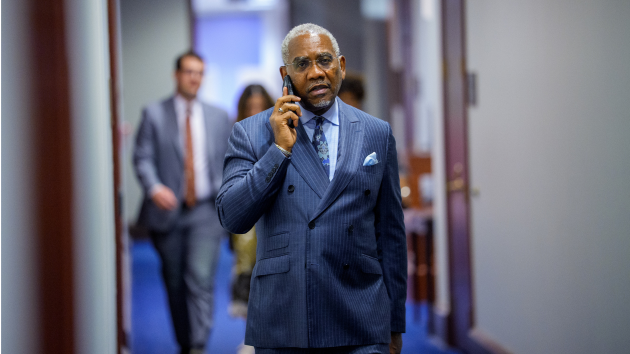
U.S. Sen. Raphael Warnock, D-Ga., departs from the Senate chamber during a vote in the U.S. Capitol Building on July 13, 2026, in Washington, D.C. Senators faced questions from reporters after two weeks of recess and being in their home states. (Finn Gomez/Getty Images)

(WASHINGTON) -- Senator Raphael Warnock, D-Ga, is calling for Democrats to investigate officials who he says have "manipulated their maps to silence the voices of Black voters," as soon as they flip the House or Senate in the midterms.

In the plan, first reviewed by ABC News, Warnock said, "Here is what Democrats must do as soon as we regain power: investigate craven politicians, ban partisan gerrymandering, stop billionaires from buying our elections, expand our democracy and guarantee the right to vote for all Americans."

Warnock has not ruled out a run for the White House in 2028. That possibility comes as roughly a third of the Congressional Black Caucus risks losing its seats before 2028, with GOP-led Southern legislatures redrawing maps after the Supreme Court's Louisiana v. Callais ruling gutted Section 2 of the Voting Rights Act.

In Louisiana, where Black residents make up roughly one-third of the population, a federal court had found that a post-2020 congressional map with only one majority-Black district likely diluted Black voting power. The legislature responded by drawing a second majority-Black district as courts had required in similar circumstances.

Justice Samuel Alito, who authored the Supreme Court opinion, which said that states only violate the Voting Rights Act when "evidence supports a strong inference that the State intentionally drew its districts to afford minority voters less opportunity because of their race."

Republicans have argued that they are redrawing congressional maps to comply with the Supreme Court or to remedy unfairly-drawn districts, and that the districts that could be changed may still elect Black representatives to Congress.

Calling for officials who he says have engaged in gerrymandering to decimate minority voices is a position Warnock hasn't called for until now, and he said in a phone interview with ABC News that the Callais decision was an "inflection point" for him to do so.

"A Democratic majority in either chamber must immediately investigate these officials, including through Congressional hearings, document requests, depositions, testimony, and, if necessary, subpoenas," Warnock's plan states. "We must analyze their statements, actions, and contributions to determine if there is any evidence that they broke any laws in their race to gerrymander and silence Black voices."

Asked whether Democrats who've engaged in partisan gerrymandering -- in California, for example -- should face investigation, Warnock said that the state's redistricting came in direct response to President Donald Trump pushing Texas to gerrymander five seats.

"There's a significant difference between that and an open process in which Californians got to vote," Warnock said. "This was not done in a smoky, dark room. They had a referendum. Again, if I had my druthers, there would be no gerrymandering."

"There are only 22 districts out of 435 in this country in which a Democrat or a Republican could win the seat. I'm a Democrat. I think that's a sad state of affairs," Warnock added.

Warnock said that he's been pushing his party to prioritize voting rights since he was first elected. In 2021, during negotiations over the Bipartisan Infrastructure Law, Warnock urged then-President Joe Biden in a phone call that legislative action on voting rights should be prioritized alongside the package.

Warnock said he tried to convince former Democratic Sens. Joe Manchin and Kyrsten Sinema to amend the filibuster so the party could pass voting rights legislation four years ago, arguing voting rights mattered more than a procedural rule.

"I said to my caucus then, as the newcomer, that I was afraid that if we don't do something ... we would cross a Rubicon in this country that we wouldn't be able to get back," Warnock said. "I said that then, and sadly, it didn't get done."

Looking ahead, Warnock said if Democrats flip even just one chamber, the party should break up pieces of the John Lewis Voting Rights Advancement Act, and "force everybody to vote on it."


Copyright © 2026, ABC Audio. All rights reserved.


DOJ investigating Rep. Cory Mills: Sources

(WASHINGTON) -- The Justice Department is investigating embattled Republican Florida Rep. Cory Mills, according to multiple sources familiar with the situation.

The investigation is in part about his finances, according to sources. Mills' office did not respond to ABC News' request for comment.

MS NOW first reported the investigation.

Further details about the investigation were not immediately clear.

Mills was elected to the House to represent Florida's 7th District in 2022 and reelected in 2024. He serves on the House Armed Services and Intelligence committees.

Last November, the House Ethics Committee voted to establish an investigative subcommittee to examine allegations that Mills violated campaign finance laws and engaged in sexual misconduct and dating violence.

Regarding allegations of sexual misconduct, Mills issued a statement last year, before the ethics committee probe was lauched, stating in part: "These claims are false and misrepresent the nature of my interactions," and he accused a former Florida primary opponent of "weaponizing the legal system to launch a political attack against the man who beat him."

This is a developing story. Please check back for updates.

Copyright © 2026, ABC Audio. All rights reserved.


Smithsonian official set to testify before Congress amid sharp White House criticism of museum

The Smithsonian American History Museum on July 07, 2026 in Washington, DC. (Finn Gomez/Getty Images)

(WASHINGTON) -- The director of the Smithsonian's National Museum of American History (MNAH) is scheduled to testify before two congressional House committees this week amid sharp criticism from the White House over the contents of the Washington, D.C. museum.

Anthea Hartig is set to face grilling by lawmakers on Tuesday morning in a House Subcommittee on Delivering Government Efficiency hearing titled "Rewriting American History: Examining the Smithsonian's Efforts to Reshape the Past," according to a committee press release.

She is also expected to testify in a related hearing on Wednesday before the Committee on House Administration, a committee spokesperson confirmed to ABC News. ABC News has reached out to the Smithsonian for confirmation.

Hartig was named in a scathing White House Domestic Policy Council report released on July 4, accusing the MNAH and its leadership of engaging in "extreme political activism" and presenting "a radical view of American history."

Asked about the report, a spokesperson for the Smithsonian told ABC News on July 5 that the institution remains committed to impartial learning.

"For more than 180 years, the Smithsonian has served the American public with nonpartisan and independent scholarship, and we remain committed to doing so," the spokesperson said.

Hartig's testimony this week would mark the first time that a top leader at the Smithsonian gets grilled publicly by Congress after President Donald Trump targeted the institution in his March 27, 2025 executive order, "Restoring Truth and Sanity to American History."

The executive order directed Vice President J.D. Vance, in consultation with the president's advisers on domestic policy, "to remove improper ideology" from Smithsonian institutions, arguing that materials that cast America in a "negative light" have no place in federal cultural institutions.

The White House last year launched an investigation into the Smithsonian, which oversees 21 museums, galleries and the national zoo, and released the July 4 report targeting the American history museum as part of this probe.

The report accuses the museum of "anti-White activism," "illegal alien activism," and "transgender activism." It also includes many photos of materials the White House has identified as problematic.

Smithsonian Secretary Lonnie Bunch, who has not addressed the report publicly, disputed its findings in an internal letter to staff that was obtained by ABC News.

Bunch wrote that Smithsonian leadership is "carefully" reviewing the report's findings, but said that the report's assessment is "not a fair characterization.

"While there will always be room for improvement, this report is not a fair characterization of the work and totality of the National Museum of American History," Bunch said in the letter. "At the Smithsonian, our work is driven by scholarship, accuracy, and an uncompromising commitment to tell the fullness of America's story."

"As public servants and the keepers of this institution, we are charged with helping a nation find understanding, hope, and clarity and as part of that duty, we are dedicated to excellence, reflection, and growth," Bunch added.

The report was published by the White House Domestic Policy Council. Vince Haley, the group's director, said in a statement to ABC News that "No American wants the Smithsonian's National Museum of American History to be a system of ideological activism."

"Unfortunately, the report demonstrates that is exactly what the Smithsonian's flagship museum has become," he said. "It is our hope and expectation that the Smithsonian will eventually rise once again to that noble obligation -- to tell America's story for our children, the world, and future generations of Americans," he added.

ABC News' Mariam Khan contributed to this report.

Copyright © 2026, ABC Audio. All rights reserved.

Darline Graham, Lindsey Graham's sister, says she will run for full Senate term

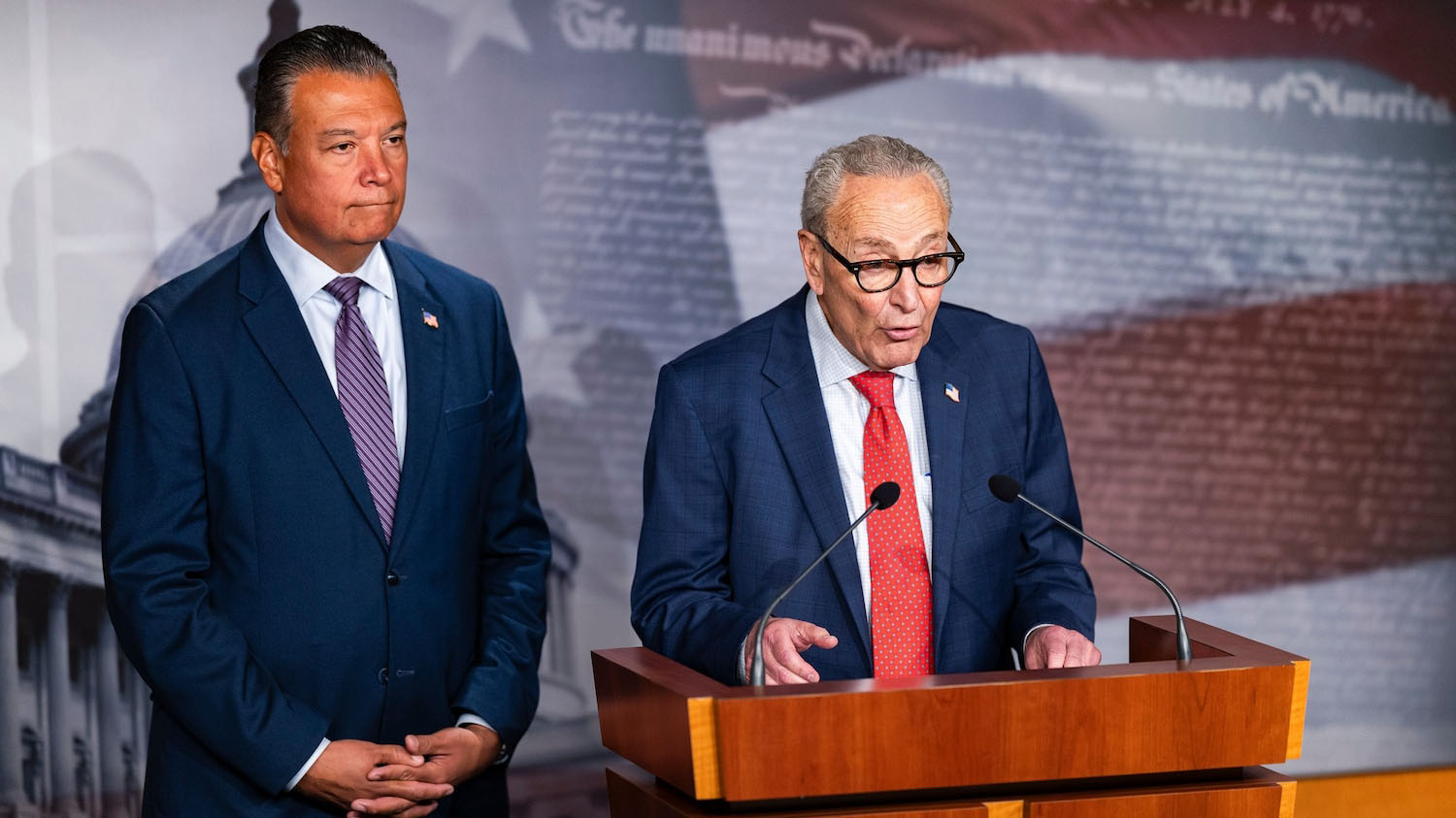
Sen. Darline Graham Nordone participates in a a ceremonial swearing-in at the U.S. Capitol, July 14, 2026, in Washington. (Finn Gomez/Getty Images)

(WASHINGTON) -- Sen. Darline Graham, the sister of the late Republican Sen. Lindsey Graham, confirmed in an interview with Fox News that aired Monday she will run for the seat for a full term, in addition to serving out the rest of Lindsey Graham's unfinished one.

"I've been praying a lot, talking to my family. But with the love of my family, with the support of his staff -- I know I'm a hard worker. I learned that from Lindsey. He cared about the people of this state. I've worked for almost 30 years for the people of this state," she said in the interview.

"I feel like I can do it," she continued. "I feel an inner peace about it. Will it be difficult? Yes, absolutely."

Asked by Fox News anchor Sean Hannity if she's inclined to get into the race or if she's made a final decision, Darline Graham said, "I've made a decision."

"You're in?" Hannity asked, to which she responded, "I'm in." 

Darline Graham was appointed by South Carolina Gov. Henry McMaster to finish the final few months of her brother's current term, which expires in January. She was sworn in last week at the Capitol.

The late Sen. Lindsey Graham's spot on the November general election ballot for a full six-year term is being filled by a special Republican primary election set for August 11. Filing for candidates for the primary opens on Tuesday and closes on July 28. 

Republican Reps. Ralph Norman and Russell Fry of South Carolina have already launched campaigns, as has businessman Mark Lynch, who ran against Lindsey Graham in the state's regular June primary.

But on Friday, President Donald Trump endorsed Darline Graham, encouraging her to run for the seat and writing, "There would be nobody better to honor the legacy of her beloved brother, Lindsey."

Darline Graham served as a commissioner on the South Carolina Commission for the Blind and has worked in other state roles, including in roles where she worked with individuals with disabilities.

Darline Graham has spoken about how her brother took care of her after both of their parents passed away when they were young.

Lindsey Graham died unexpectedly on July 11 at the age of 71. Memorial services for the longtime Republican lawmaker will take place in Washington, D.C., and South Carolina next week.

Copyright © 2026, ABC Audio. All rights reserved.


Democratic senators want answers about Hegseth's military testosterone plan

Paratroopers assigned to the 82nd Airborne Division, walk the final mile of the 12-mile ruck march during E3B on Fort Liberty, North Carolina, Sept. 21, 2024. (U.S. Army)

(WASHINGTON) -- Senate Democrats are pressing Defense Secretary Pete Hegseth for answers about his directive requiring the military to measure troops' testosterone levels, seeking details on how the policy will be carried out amid concerns over how it will apply to women and whether it could inadvertently encourage service members to self-medicate with potentially dangerous supplements.

In a letter to Hegseth, Sens. Richard Blumenthal of Connecticut, Mazie Hirono of Hawaii, Gary Peters of Michigan, Elizabeth Warren of Massachusetts and Ruben Gallego of Arizona said the Pentagon has provided little explanation for the new requirement, raising questions about its scientific basis, cost and potential consequences.

"The Department has provided no evidence that this sweeping new policy will improve force readiness or health, nor has it explained the scientific basis, costs, or risks associated with implementing it across the force," the senators wrote.

Last week, Hegseth directed the military to begin screening testosterone levels for all service members, including women, age 30 and older as part of their annual physical health assessments, expanding routine exams that have traditionally focused on baseline health measures such as vision, hearing and other standard medical screenings. Troops under 30 may opt into testing voluntarily, and any recommendation for testosterone replacement therapy, or TRT, would also be voluntary for all ages.

The policy has yet to be formally implemented, thus the specifics have not yet been figured out and it remains unclear when service members will begin undergoing testosterone screenings as part of their annual health assessments, though Hegseth directed a plan be ironed out by Aug. 15. 

The cost is also unknown and the Defense Department could require additional medical personnel to be hired for the screenings at routine annual exams.

The move comes as a broader focus on fitness has been core to Hegseth's tenure -- an unusual move for a role traditionally focused on large operations and the macro workings for the Pentagon -- which includes regular videos from the Pentagon of Hegseth working out with troops. 

Hegseth has directed the services to adjust their fitness tests and reassess body-fat standards, including new measurement methods introduced earlier this month. The Army has also begun integrating gender-neutral fitness requirements for soldiers serving in ground combat roles.

Among the unresolved questions are whether service members could face administrative consequences if their testosterone levels fall below a threshold the Pentagon has yet to define and how the policy will apply to women.

"Coupled with the Department's recent repeated efforts to redefine military culture around an exaggerated conception of masculinity, this initiative risks undermining years of work to ensure that women service members are evaluated and valued based solely on their ability to perform the mission," the senators wrote.

Some welcomed the expanded access to testosterone screening and treatment, arguing that obtaining testosterone replacement therapy through Tricare, the military's health insurance program, can be cumbersome. But others warned the policy could create unintended incentives for troops to use unregulated supplements or anabolic steroids to avoid being flagged for potential health issues, while raising concerns about embarrassment for those found to have low testosterone.

"I think this is a great idea on paper, but we need to be careful about how it's implemented," said one official who works in fitness coaching and spoke on the condition of anonymity because they were not authorized to speak to the media.

Low testosterone has long been a concern in some parts of the military, particularly within the special operations community, where prolonged stress, intense physical demands and inadequate caloric intake are believed to contribute to lower hormone levels, though there's little detailed research on the subject. 

At the same time, testosterone replacement therapy, or TRT, has surged in popularity across podcasts, social media and the broader wellness industry, where it is often promoted as a way to boost energy, muscle mass and overall vitality. Medical experts caution, however, that clinically low testosterone is relatively uncommon.

Testosterone deficiency affects roughly 2% of men, according to the American Urological Association, and physicians have warned that the growing popularity of TRT has created the misleading impression that the condition is far more widespread than medical evidence suggests.

Moreover, factors such as insufficient sleep and poor nutrition can contribute to lower testosterone levels, studies show, two issues the military has long struggled to address.

Nutrition, in particular, has been a persistent challenge across the services, with troops often reporting inconsistent access to high-quality, protein-rich meals. Military dining facilities have faced criticism for menus heavy on fried foods and carbohydrates, sugar, limited portions and operating hours that do not always align with the schedules of service members working long or irregular shifts.

"It's a readiness, retention, recruiting and long-term health issue," Rob Evans, an Army veteran whose app Hots & Cots collects reviews from service members on housing and food on military bases, told ABC News about issues with nutrition on military facilities.

Copyright © 2026, ABC Audio. All rights reserved.


Weather Center

High School Scoreboard

Sports Scores

Facebook