



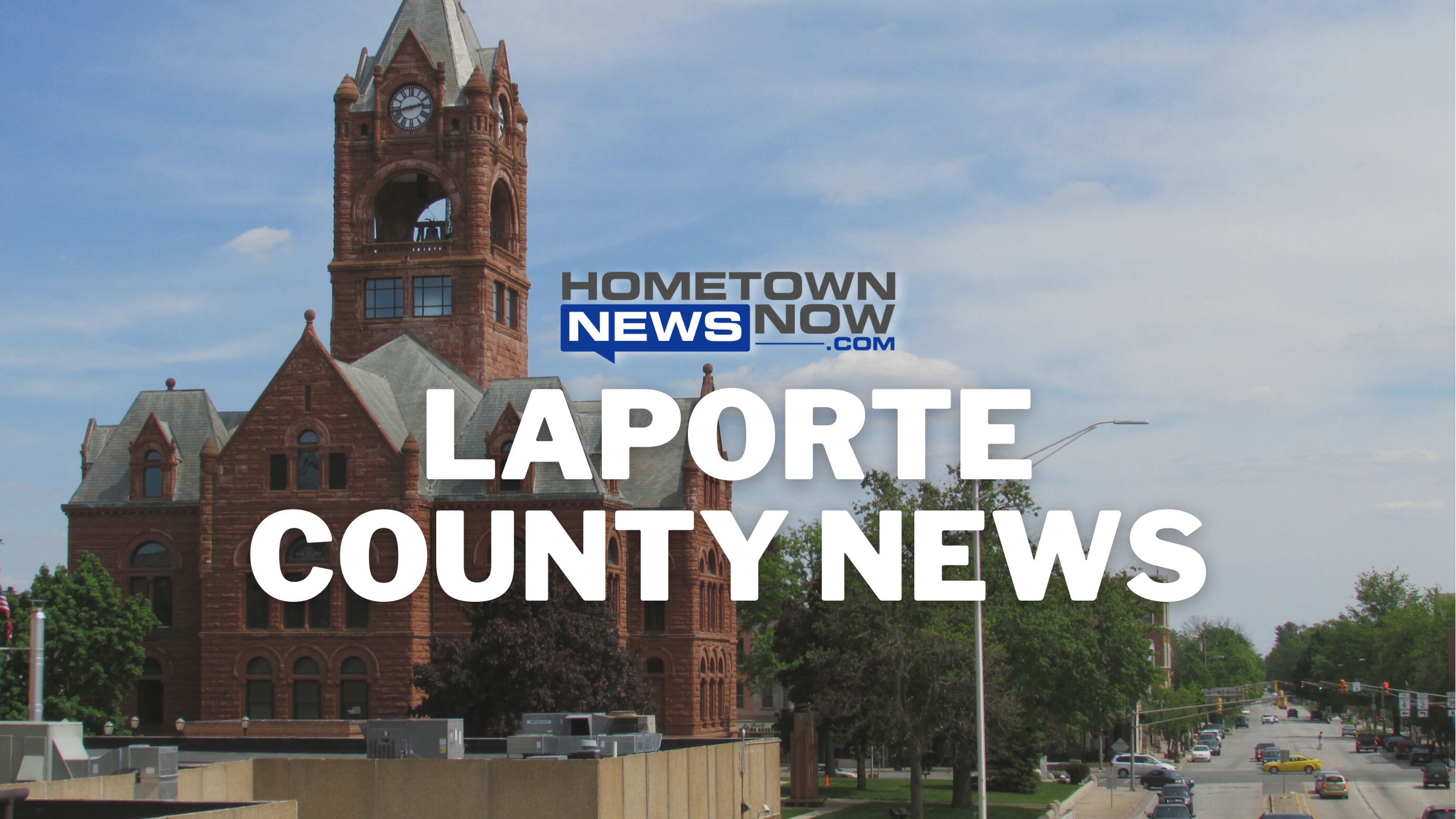
(La Porte County, IN) - La Porte County is close to having a new set of standards for solar electricity developments. Last week La Porte County’s Plan Commission passed a revised ordinance regulating future solar farm projects. It updates the original solar ordinance codified in 2021 and tightens requirements for setbacks, screening, and land conservation.
County Commissioner Joe Haney says it’s one of the strictest solar ordinances in the state. “We really put as many restrictions as were feasible,” he said. “And we’re still trying to protect the rights of everybody involved here—the people who want to lease their land and the people that maybe aren’t too keen on it. The key here is to strike that balance, and I think we did.”
The new rules will require a 250-foot setback from property lines. According to Haney, other counties allow shorter setbacks measured off from residential structures, not property lines.
The revised ordinance also seeks to hold solar companies more accountable for taking care of the land that their equipment is on. Companies are now responsible for all decommissioning obligations for the duration of the project, not just the first twenty years. They also have to maintain, not just install, fencing and screening. Trees and bushes as a visual barrier must be at least six feet tall at planting and grow to at least twelve feet in height. Moreover, any change to the land must be approved by the Building Commissioner, and it must be returned to its natural condition, protecting topsoil down to a depth of four feet. If adjacent homeowners wish to forgo any of these stipulations, they may do so, if compensated by the solar company.
Haney expects other counties will be taking notice of the new restrictions. He said there has already been pushback from solar companies regarding the setbacks. “They were extremely unhappy with that,” he admitted. “I think they’re scared there will be a domino effect of other counties strengthening their ordinances to match what we’ve done here in La Porte County.”
Not everyone is as confident in the new-and-improved solar ordinance. Local farmer Steve Holifield is skeptical.
“I’m sure they put a lot of effort into it; I’m not debating that,” he told HTNN. “I’m glad they updated it, but I still don’t think it’s strict enough.” Holifield said he would have preferred a 500-foot setback. He doesn’t think other solar companies will be deterred and says at least six others are still pursuing properties in the area.
He says the process for solar companies to repurpose land is far easier than what famers have to go through. “As a farmer, if I wanted to add cows to my property, increase the herd of my hogs, chickens, dairy farm, the hoops we would have to jump through are unbelievable and would probably a minimum of two years to get accomplished,” he said. “We’ve already lost one dairy farm because of this.”
Mostly, Holifield is concerned about the lowering of neighboring property values, which was not addressed in the ordinance. “We have never denied the fact that [landowners] have the right to do what they want with their property,” he stressed, “but what right do they have to devalue my property?”
At last week’s meeting, attorney Doug Biege advised the Plan Commission that there is no legal precedent for county government to enforce property value regulations. “There’s plenty of law on diminution of property values,” Biege told the commission. “But there’s no law on the county enforcing diminution of property values on behalf of a private individual. And I’m not sure we could do it, and it will certainly be challenged if we try to do it.” Haney and Biege agreed that property value is a valid concern, but the county is not the proper entity to address it. “I’ve spent a lot of time on it,” said Biege, “and I don’t see any way that we can get anything that’s going to be viable on that issue.”
Holifield is also concerned that the ordinance does not put a cap on the total acreage of land potentially occupied by solar panels, and he’s not convinced that solar companies will be around long enough to fulfill their obligations. He thinks a ban on solar projects is more appropriate, at least until after the upcoming elections, in case federal backing for such projects suddenly fizzles. A moratorium on solar projects was once again considered by the Plan Commission, but was voted down 7-2.
The already-approved RWE Bluestem solar project will not be bound by the new ordinance, which is expected to be finally approved by the County Commission later this month.
Time will tell if other solar companies seek to set up operations in La Porte County.
“We desperately need power in northwest Indiana,” Haney said, noting the planned closing of the coal-fired power plant in Michigan City. “This power has to come from somewhere, and right now, this area is dependent on power coming from a lot of outside areas.”

