




Politics News

DOJ charges Raul Castro with murder for 1996 plane shootdown

Former Cuban President Raul Castro speaks during the National Assembly at Convention Palace on April 19, 2018 in Havana, Cuba. (Photo by Alexandre Meneghini-Pool/Getty Images)

(WASHINGTON) -- The Justice Department on Wednesday charged former Cuban President Raul Castro with murder over his alleged role in shooting down two planes that were carrying humanitarian aid in 1996, according to a newly unsealed court docket. The shootdown resulted in the deaths of three Americans.

The indictment marks a major escalation in the United States' ongoing pressure campaign to achieve regime change of the island nation's Communist-led government, though it's not immediately clear whether the 94-year-old Castro will ultimately see the inside of a U.S. courtroom.

The indictment charges Castro with seven counts including conspiracy to kill U.S. nationals, destruction of aircraft and murder for each of the four passengers aboard the planes being flown by Brothers to the Rescue, a group that conducted rescue missions for Cuban exiles who sought to flee the country.

Acting Attorney General Todd Blanche and other senior officials are expected to speak about the charges later in Miami.

Copyright © 2026, ABC Audio. All rights reserved.

Barney Frank, former Massachusetts congressman and gay rights advocate, dies at 86

Committee chairman Rep. Barney Frank (D-MA) speaks during a House Financial Services Committee hearing on Capitol Hill February 24, 2010 in Washington, DC. (Photo by Brendan Smialowski/Getty Images)

(WASHINGTON) -- Barney Frank, the outspoken former Massachusetts congressman who championed Wall Street reform and served as one of the first openly gay members of Congress, has died at 86, sources told ABC News.

Frank's sister, Doris Breay, told ABC affiliate WCVB in Boston that Frank died Tuesday night.

"He was a wonderful brother, and I was lucky to be his sister," she said.

The Democratic lawmaker represented Massachusetts' 4th Congressional District for over 30 years and served as chairman of the powerful House Financial Services Committee from 2007 to 2011. He was a leading co-sponsor of the 2010 Dodd-Frank Act, which was enacted in response to the 2008 financial crisis.

Frank announced he would not seek reelection in 2012 due to redistricting challenges and left office the following year. He admitted that coming out as gay at age 47 would define his career.

"The best antidote to prejudice is reality because prejudice by definition is based on ignorance," Frank told reporters. "I am proud by my finally coming out – I was 47. It didn't happen in a clean sweep, but when I volunteered finally to come out in 1987, I do think it was helpful."

Born in Bayonne, New Jersey, Frank attended Harvard College and Harvard Law School and was elected as a state representative in Massachusetts in 1972. He achieved notoriety during this time for unsuccessfully sponsoring a bill to legalize prostitution in Boston's red light district.

Frank successfully ran for the U.S. House of Representatives in the 4th Congressional District in 1980, a seat he held for more than 30 years.

In 1987, Frank became the first sitting member of Congress to come out as gay. He continued championing LGBT rights throughout his time in Congress, advocating for the legalization of same-sex marriage, the right to serve openly in the military and strengthening employment discrimination laws.

He chaired the House Financial Services Committee when Democrats were in the majority from 2007 until 2011, overseeing the financial industry during one of the most turbulent economic periods of U.S. history.

Frank was key in ushering the Wall Street bailout through Congress in 2008. He, along with former Sen. Chris Dodd, had their names attached to a sweeping Wall Street reform bill that was signed into law by President Barack Obama in 2010.

The Dodd-Frank Act placed tough new rules on the financial sector as a way to avoid future mortgage crises. It also enacted a new Consumer Financial Protection Bureau to protect Americans from large corporations.

The law was pilloried by Republicans as Washington overreach and in 2018, a new bill signed into law by President Donald Trump rolled back some requirements.

Frank is survived by his husband Jim Ready, whom he married in 2012.

-ABC News' John Parkinson, Lauren Peller, Rick Klein and Luke Barr contributed to this report.

Copyright © 2026, ABC Audio. All rights reserved.


Trump helps oust Massie and other takeaways from Tuesday's primaries

Rep. Thomas Massie speaks with supporters after his concession speech on May 19, 2026 in Hebron, Kentucky. Massie, who has served Kentucky's 4th Congressional District since 2012, conceded his loss after the most expensive US House Primary in US history against Trump-endorsed candidate Ed Gallrein. (Photo by Jon Cherry/Getty Images)

(WASHINGTON) -- A batch of closely watched primaries in six states on Tuesday both set up some key midterm election matchups and gestured to major forces shaping the Democratic and Republican parties -- from the strength of President Donald Trump's endorsement to the road to the White House in 2028.

Here are some of takeaways from Tuesday night's results.

The strength of Trump's endorsement, again?

President Donald Trump had turned his ire on Rep. Thomas Massie, the maverick Republican representing Kentucky's 4th Congressional District, given Massie's push to release the Jeffrey Epstein files, his vote against the president's sweeping domestic tax policy legislation and his vocal opposition to the Iran war.

Trump constantly excoriated Massie and endorsed his primary opponent Ed Gallrein and Defense Secretary Pete Hegseth even campaigned with Gallrein on Monday. The primary also became the most expensive House primary on record, with more than $32 million in ad spending.

Massie had held firm -- adamant that his constituents would pull through for him. But the power of Trump's endorsement was more firm, just as it had been in the Louisiana Senate primary last Saturday, where Trump-endorsed Rep. Julia Letlow and state Treasurer John Fleming advanced to a runoff after Trump had turned against incumbent Republican Sen. Bill Cassidy.

"We weren't really running against Ed Gallrein, we weren't running against Donald Trump. We were running for what we believe in," Massie told supporters on Tuesday night.

Mixed results for Trump in Georgia

But it seems Trump's endorsement could not carry his candidate of choice, Lt. Gov. Burt Jones, over the finish line outright in the Georgia Republican gubernatorial primary. Jones now heads towards a June 16 runoff against billionaire businessman Rick Jackson.

In remarks Tuesday evening, Jackson, who entered the race just three months before the primary, said his campaign sent an "earthquake" through the political establishment and called Jones a political insider.

"We have 28 days to finish it, and the choice could not be more clear or more important. Burt Jones is a political insider. I'm the opposite. I don't owe the lobbyists anything. I don't need the establishment's permission. I cannot be bought, and I will not back down," Jones said Tuesday evening.

What Tuesday meant for potential 2028 presidential candidates

Tuesday was a good night for Pennsylvania's Democratic Gov. Josh Shapiro, a rumored 2028 presidential candidate, as all four of the primary candidates he endorsed in Pennsylvania's battleground U.S. House districts -- where Democrats hope to flip seats held by GOP incumbents -- were projected by ABC News to win, although one of the four, Paige Cognetti, was unopposed.

Shapiro's success on Tuesday could bolster his standing among Democrats both in the state and nationally -- possibly helpful if he does launch a bid for the presidency -- although he still faces the general election campaign for governor against state Treasurer Stacy Garrity, and Democrats still face an uphill battle trying to flip all four seats they are targeting.

And down south in Georgia, Gov. Brian Kemp, who has not ruled out a presidential run in 2028, also played a hand in shaping the state's GOP Senate primary. Kemp backed Derek Dooley, a former football coach who is projected by ABC News to face a runoff against Rep. Mike Collins in a race that Trump did not endorse in.

Kemp, who opted out of running for Georgia's Senate seat after being recruited by Republicans, threw the full force of his political weight behind elevating Dooley from a political unknown to a candidate for one of the most-watched Senate races in the country.

Working behind the scenes, Kemp made calls to donors to build support for Dooley, and Kemp's PAC, Hardworking Americans Inc., has also invested millions in the race to support Dooley, the son of legendary former University of Georgia football coach Vince Dooley.

Kemp also campaigned heavily with Dooley in the lead-up to Georgia's primary.

Kemp has had a rocky relationship with Trump since refusing his pressure to overturn Georgia's election results in 2020. But Kemp remains popular among Georgians, winning reelection against a Trump-endorsed primary challenger in 2022.

ABC News' Emily Chang and Halle Troadec contributed to this report.

Copyright © 2026, ABC Audio. All rights reserved.

Vance, Blanche don't rule out Jan. 6 rioters getting 'Anti-Weaponization Fund' payouts

cting U.S. Attorney General Todd Blanche testifies during a Senate Committee on Appropriations, Subcommittee on Commerce, Justice, Science, and Related Agencies hearing in the Dirksen Senate Office Building on Capitol Hill on May 19, 2026 in Washington, DC. (Anna Moneymaker/Getty Images)

(WASHINGTON) -- Vice President JD Vance and acting Attorney General Todd Blanche faced questions Tuesday on the $1.776 billion "Anti-Weaponization Fund" to compensate those who allege they were wrongly targeted under the Biden administration.

Both notably declined to rule out potential payouts for individuals who assaulted law enforcement, including the rioters who stormed the U.S. Capitol on Jan. 6, 2021.

Vance insisted that requests would be analyzed on a "case-by-case" basis and that "anybody can apply." 

The fund, which was first reported last week by ABC News, was announced Monday as part of a settlement agreement in Trump's $10 billion lawsuit against the Internal Revenue Service.

It has already drawn condemnation from lawmakers on both sides of the aisle amid growing questions over how the funds will be distributed and whether they could be awarded to political backers of the president.

Senate Majority Leader John Thune said Tuesday that he is "not a big fan" of the fund.

"And I am not sure exactly how they intend to use it. But my understanding is that was just announced. I don't see a purpose for that," Thune told reporters at the Capitol.

Vance, Blanche pressed on who will be eligible for payouts

ABC News Chief Washington Correspondent Jonathan Karl, during a press briefing on Tuesday, asked Vance about the fund.

"Why should taxpayers be paying to settle a $10 billion lawsuit that was brought by the president of the United States, and should people that attacked the Capitol building and assaulted police officers, should they be eligible, should they receive money? Should they receive money from this fund?" Karl asked.

Vance didn’t directly answer, instead claiming that none of the money would go to Trump personally, his administration or his family, but that "anybody can apply for it." Vance added that even Hunter Biden, former President Joe Biden's son, would be eligible to ask for funds.

"I understand that everybody is eligible to apply for this one. I mean, you're eligible, but I assume you're not going to apply, and you don't think you should get money out of this fund. So, isn't it just as easy to say that people that attacked police officers should not get taxpayer money from this fund?" Karl followed up.

"Well, look, Jon, we're not trying to give money to anybody who attacked a police officer. We're trying to give money -- not give money -- we're trying to compensate people where the book was thrown at them, they were mistreated by the legal system,” Vance said.

In a hearing on Capitol Hill earlier Tuesday, when pressed whether individuals who assaulted Capitol Police officers would be eligible for payments, Blanche similarly said, "Anybody in this country is eligible to apply if they believe they're a victim of weaponization."

Blanche wouldn't commit to setting a policy that bans funds being distributed to anyone who assaulted police, saying the commissioners overseeing the fund will be tasked with deciding who is eligible.

"But why not this specific issue of violent acts, convicted of violent acts against police officers? Do you feel they should get compensation after being convicted of violent acts?" Democratic Sen. Jeff Merkley asked the acting attorney general.


"My feelings don't, don't matter, senator," Blanche replied.

Blanche was also questioned on whether he would rule out certain individuals from being eligible for payments, specifically Oath Keepers and Proud Boys. The acting attorney general reiterated that anyone can apply.

"The commissioners will set rules, I'm sure. That's not for me to set, that's for the commissioners. ... And whether an individual Oath Keeper, as you just mentioned, applies for compensation is -- anybody in this country can apply," Blanche said.

Blanche won't say who will be commissioners, claims there will be 'full transparency'

The acting attorney general sought to compare it to an Obama-era initiative that set up ways to settle claims brought by Native Americans who had alleged they had been subject to widespread mistreatment by the government

He also argued that the fund won't solely be used to compensate supporters of the administration. 

"It's not limited to -- to Republicans, ... it's not limited to Biden weaponization, it's not limited to in any way, scope or form to Jan. 6 or to Jack Smith," Blanche said at a Senate Appropriations subcommittee hearing. "There's no limitation on the -- on the claims."

Democratic Sen. Chris Van Hollen lambasted Blanche for seeking to compare the $1.776 billion fund to the Obama-era initiative for Native Americans.

Van Hollen noted that specific fund received sign off from a federal judge, whereas Monday's announcement had no judicial involvement or approval. 

Facing questions about who would be eligible for possible payouts, Blanche told lawmakers he will "commit" to "making sure that the commissioners are effectively doing their job."

Blanche, though, did not name who will be on the five-person commission -- nor did he say who he would appoint.

He also said he has "no idea" if Trump will make suggestions.

Blanche also claimed there will be "full transparency" on the fund, but with caveats.

In an exchange with Democratic Sen. Chris Coons, Blanche was questioned over whether disbursements from the $1.776 billion will be subject to public disclosure.

Blanche said he wanted to be "careful" in his answer given privacy laws that might restrict the Justice Department from disclosing certain information, but otherwise said there would be "full transparency" via regularly quarterly reports that will be released by the department regarding the commission's actions. 

"The reason why I want to be careful of my answer is because there's obviously laws that exist around privacy that would -- may prevent some of the information that commission takes in from being fully public," Blanche said. "Beyond that, there will be full transparency, and I commit to you that beyond the ... laws that exist around privacy and privileges and whatnot."

Copyright © 2026, ABC Audio. All rights reserved.

Trump endorses Ken Paxton over GOP incumbent John Cornyn in Texas Senate primary

Republican US Senate candidate Ken Paxton speaks to supporters at a campaign stop on May 15, 2026 in Little Elm, Texas. (Ron Jenkins/Getty Images)

(WASHINGTON) -- President Donald Trump on Tuesday issued an endorsement in the Texas Senate primary runoff, backing Texas Attorney General Ken Paxton over Republican incumbent John Cornyn.

Trump announced his pick in a social media post, calling Paxton "a true MAGA Warrior who has ALWAYS delivered for Texas, and will continue to do so in the United States Senate."

The president said Cornyn, who is seeking a fifth term, "is a good man, and I worked well with him, but he was not supportive of me when times were tough."

Paxton, a conservative firebrand who has become popular among the president's base despite being involved in several scandals, said he was "incredibly honored" to have Trump's endorsement and promised to promote his "America First" agenda if elected.

Trump appeared to address Paxton's past controversies in his endorsement, writing, "Ken Paxton has gone through a lot, in many cases, very unfairly, but he is a Fighter, and knows how to WIN."

Despite not receiving Trump's endorsement, Cornyn on Tuesday reiterated his commitment to the race and emphasizing his "trust" in Texas Republican voters.

Cornyn did not explicitly address Trump's comments about him, but insisted that he stands firmly by the president's side.

"I have worked closely with President Trump through both of his Presidential terms and voted with him more than 99% of the time. He has consistently called me a friend in this race," Cornyn wrote in a post on X after Trump's Paxton endorsement.

Early voting is already underway in the Republican primary runoff, set for May 26.

The winner will face Democrat James Talarico in November. Talarico, a Texas state representative, defeated Rep. Jasmine Crockett in the March 3 primaries.

"As I said on primary night, it doesn't matter who wins this runoff. We already know who we're running against: the billionaire mega-donors and their corrupt political system," Talarico said in a statement on Tuesday responding to Trump's endorsement.

"For decades, John Cornyn and Ken Paxton have embodied a broken politics that enriches wealthy donors while costs skyrocket for the rest of us," Talarico said. "Our movement to take back Texas for working people rises above party politics -- because the biggest fight in this country is not left versus right, it's top versus bottom."

Copyright © 2026, ABC Audio. All rights reserved.

Trump says White House ballroom will be a 'shield' as he shows off construction site

President Donald Trump speaks to the press near the construction site of his proposed ballroom at the White House in Washington, May 19, 2026. (Chip Somodevilla/Getty Images)

(WASHINGTON) -- President Donald Trump, over the noise of drills and hammers, showed off the construction site for his controversial White House ballroom in a tour with reporters on Tuesday.

Trump described the massive project, which started with a demolition of the White House East Wing, as a fortress for himself and future presidents.

"This is a shield that protects everything that's inside, everything that's on top," Trump said. He also said that it would be the "safest building ever built, in my opinion."

With poster board mock-ups in hand of what the finished product will look like, Trump spoke above the hollowed construction site. The underground complex, Trump said, will be six stories deep and include a military hospital, research facilities and meeting rooms. 

"Impenetrable steel" and window glass that is "approximately four inches thick" are among the security features, according to Trump. The roof, he said, will have "massive drone capacity" and will act as a "drone port" so "it protects all of Washington."

Asked for additional detail about a "drone port," the White House offered no additional explanation, referring ABC News to Trump's comments Tuesday morning.

In March, a judge rules that Trump can't build the ballroom without authorization from Congress, though he said security-related work could go on. An appeals court then stepped in to allow all construction of the project for now while they consider the case more fully. A hearing in the case is set for June 5.

Trump on Tuesday appeared to argue that the entire building was interconnected.

"The roof goes with the ground floor; the ground floor goes with the roof. The roof also goes down into the basement. Everything is connected. Intertwined, elevators, heating, air conditioning. It's one building. That's why we're trying to explain that this is one well-knit building," Trump said.

During the tour, Trump also maintained his claims that the White House ballroom itself will not cost any taxpayer money.

"So, all of this was paid for by myself. And because I keep hearing like I'm not. We are making a gift of this. This is a gift. This is not going to be paid for by the taxpayer," Trump said. 

The president, who has said that he is one of the people paying for the project, has not publicly released how much he has donated. The White House also said they aimed to raise the funds for the ballroom, the cost of which jumped to $400 million, through private donations.

"This is a gift to the United States of America, and more than a gift. It's going to be one of the most beautiful buildings that's ever been built in the country or in Washington, D.C.," Trump said on Tuesday.

His comments come as some congressional Republicans seek $1 billion in funding, some of which would go to the building project. Democrats have panned the proposal.

"Congress is approving money for security ... But this building, I mean, I -- I put up the money to build this building, along with a lot of great patriots," Trump said.


Copyright © 2026, ABC Audio. All rights reserved.

Trump isn’t on the ballot in Georgia, but he could decide Tuesday's races

Brian Kemp, governor of Georgia, left, and Marty Kemp, Georgia's first lady, second left, watch as Derek Dooley, Republican U.S. Senate candidate for Georgia, second right, speaks during a campaign event at Whitetail Coffee Shop in Milton, Georgia, on Friday, May 15, 2026. (Photographer: Elijah Nouvelage/Bloomberg via Getty Images

(WASHINGTON) -- Donald Trump might not have been in attendance at the Atlanta Press Club Republican primary debate for U.S. Senate last month, but his presence filled the room.

“I am running for the United States Senate so that I can go to the Senate and be a warrior for Donald Trump and his ‘America First’ policies,” said U.S. Rep. Buddy Carter in his opening statement.

When Carter’s House colleague and opponent in the Senate primary, U.S. Rep. Mike Collins, was asked about the direction in which the Republican Party should go once President Trump is no longer in office, Collins told the moderator “we need to continue Donald Trump's ‘America First’ agenda,” adding, “it's one of the reasons that I ran.”

In a midterm cycle where Trump’s endorsement power has taken down incumbents, plucked winners out of crowded special elections, and fueled intra-party spending wars, the president has not yet backed a candidate in the Republican primary for U.S. Senate in Georgia.

The absence of a Trump endorsement in the race has led both Carter and Collins to focus their campaigns around winning over Trump’s base – and maybe even Trump himself – as they both vie for the president’s backing in what is expected to be one of the most competitive states on the map this year, one that could decide the balance of power in Congress.

Incumbent Democratic Sen. Jon Ossoff is one of the most vulnerable Senate Democrats up for re-election in 2026, and Tuesday's primary could decide who goes head-to-head with the rising star in the Democratic Party in November.

Brian Kemp, the two-term Republican governor of Georgia who turned down calls to run for the Senate seat himself this year, is supporting neither congressman. Kemp has instead thrown his political weight behind former college football coach Derek Dooley, the son of legendary University of Georgia football coach Vince Dooley.

Kemp has made calls to donors to rally support for Dooley, a Kemp advisor told ABC News. Kemp’s PAC, Hardworking Americans Inc., has also poured millions in the race to help support Dooley, who calls himself a “political outsider.”

Kemp has had a rocky relationship with the president himself, after contesting Trump’s claims of election fraud in the 2020 election. However, Kemp remains popular among Georgians, winning reelection against a Trump-endorsed primary challenger in 2022.

Tuesday's primary races in Georgia will be a test of Kemp’s own political power in the state; the outgoing Georgia governor has not ruled out a potential 2028 presidential run.

The real test of Trump’s influence in Georgia will come in the Republican primary to replace term-limited Kemp as governor, where the president’s early endorsement of current Lt. Governor Burt Jones failed to clear the field and instead set the stage for a competitive primary battle against billionaire businessman Rick Jackson, who is neck and neck with Jones in the polls.  

But unlike Georgia Secretary of State Brad Raffensperger and Georgia Attorney General Chris Carr – who are also running in the Republican primary for governor but are making appeals to more traditional GOP voters – Jackson is not shying away from running in the “Make America Great Again” lane, even without Trump’s backing.

“I'm a conservative outsider and a businessman that wants to bring business solutions to Georgia, just like President Trump did,” Jackson said at the primary debate for governor.

Trump hosted a tele-rally for Jones earlier this month, where he reiterated his endorsement for the longtime Trump loyalist.

“There's a lot of confusion. Everyone's saying I endorsed them. I didn't. I endorsed a man named Burt Jones,” Trump told supporters on the call.

On the other side of the aisle, the Democratic candidates for governor are also talking about Trump – in how best to fight his policies.

“Unlike some people, I'm not running for governor to be Donald Trump; I'm running to stand up to him,” said former Atlanta Mayor Keisha Lance Bottoms in the latest ad from her campaign, which calls out Jackson and Jones over their courting of Trump’s favor.

Bottoms is endorsed by former President Joe Biden and is widely considered the frontrunner in the Democratic primary race, but it is unclear whether she will meet the vote threshold to avoid a runoff. Democratic opponents that Bottoms could face in a potential runoff include former DeKalb County CEO Michael Thurmond, former Republican Lt. Gov. Geoff Duncan, and former Georgia state Sen. Jason Esteves.

In Georgia, if one candidate does not receive 50% of the vote, the top two finishers will advance to a runoff election on June 16. And with so many well-known contenders for office this year, runoffs may be more likely on both sides of the aisle, up and down the ballot.

Copyright © 2026, ABC Audio. All rights reserved.

Pennsylvania could be key to winning Congress: Primaries set up key races for House, governor

Josh Shapiro, governor of Pennsylvania, campaigns during Fiesta on Hamilton ahead of a primary election in Allentown, Pennsylvania, US, on Sunday, May 17, 2026. Pennsylvania will hold a primary election on May 19. Photographer: Joe Lamberti/Bloomberg via Getty Images

(NEW YORK) -- Voters in the battleground state of Pennsylvania are headed to the polls on Tuesday in primaries that will set up matchups critical for both control of the state and the House in the 2026 midterm elections.

Both parties know how key the state is to their efforts.

"The road to the majority in the House of Representatives runs through Pennsylvania," Pennsylvania Republican Party Executive Director James Markley told ABC News.

And Allentown Mayor Matt Tuerk, a Democrat, told "This Week" co-anchor Martha Raddatz in a recent interview, "The path to a Democratic majority in Congress is places like Allentown, places like Scranton."

A marquee race for governor

Pennsylvania Gov. Josh Shapiro, a Democrat first elected as governor in 2022 after almost two decades in state politics, is set to vie for a second term. He faces speculation that he’ll run for president in 2028 but has said he currently remains focused on 2026.

Republican State Treasurer Stacy Garrity is set to be the GOP’s standard bearer for governor. She has said she hopes to unseat Shapiro by pointing to challenges Pennsylvanians still face with affordability and other issues.

Neither candidate faces any opponents on their primary ballots.

The battle for the 7th District

Across the state, Democrats are targeting four House districts held by Republicans in Pennsylvania -- among the highest number of seats the party is targeting in any state.

One of those four seats is Pennsylvania’s 7th Congressional District, which includes the Lehigh Valley. Incumbent Rep. Ryan Mackenzie, a Republican, is set to try to win a second term in Congress, and is unopposed in the Republican primary.

In 2024, he flipped the seat once held by then-Rep. Susan Wild, a Democrat, by just 1 percentage point, but he says he's confident he'll be able to hold the seat.

"What we've seen is that all four of the [Democratic] candidates have raced to the left, and they've all mirrored each other on the radical-left policies,” he told ABC News, saying later that he feels voters trust him on delivering for the region.

The four-way Democratic primary in the district has both candidates with distinct backgrounds as well as some party infighting.

Gov. Josh Shapiro himself has thrown his support behind Bob Brooks, a union leader and former firefighter. Brooks has excited supporters with his blue-collar bona fides and the chance for him to galvanize working-class Pennsylvanians to support him.

However, Brooks has faced scrutiny from both Democrats and Republicans over how he appeared to get so much institutional support -- including from Shapiro and from progressive stalwart independent Sen. Bernie Sanders -- before the primary.

“I’m a 20-year firefighter, union leader, and baseball coach, and I’ve had nearly every job in the book -- dishwasher, snowplow driver, bartender, and Teamster…. A lot of politicians want to talk about the affordability crisis. I've lived it,” Brooks said in a statement to ABC News.

Ryan Crosswell, a former federal prosecutor, is also on the ballot and has decried the institutional support going to Brooks. Crosswell is a former Republican who resigned from the Justice Department in February 2025 because he disagreed with how the DOJ wanted to drop corruption charges against then-New York City mayor Eric Adams.

“I'm the only candidate in this race who hasn't either been a career politician or been hobnobbing around them, and that includes Bob Brooks. So I think I had a lot more in common with everyday Americans,” Crosswell told ABC News in an interview.

Brooks’ campaign has emphasized local support for him from state lawmakers, local Democratic groups, and local labor groups.

The other Democrats on the ballot in Pennsylvania’s 7th District are Lamont McClure, a former Northampton County executive, and Carol Obando-Derstine, who served as an aide to former Democratic Sen. Bob Casey.

Other key districts

The other three districts that are likely to be battlegrounds are Pennsylvania’s 1st, 8th and 10th districts. Similar to Mackenzie, none of the Republican incumbents in those districts have any primary opponents.

In the 1st District in the Philadelphia suburbs, incumbent Rep. Brian Fitzpatrick is set to try to win a sixth term in Congress. Bob Harvie, a Shapiro-backed Bucks County commissioner, and Luca Simonelli, a mathematician and political newcomer, are vying in the Democratic primary for the chance to flip the seat.

And in the 8th District, Rep. Rob Bresnahan is set to try to win a second term in Congress after flipping the seat previously held by then-Democratic Rep. Matt Cartwright in 2024 by a slim margin. Paige Cognetti, the mayor of Scranton, Pennsylvania, will be set to be Democrats’ standard-bearer to flip the seat. She faces no primary challengers.

In the 10th District, incumbent Rep. Scott Perry, a staunch ally of President Donald Trump, is set to try to win an eighth term in Congress. The Democrats vying to unseat him in their own primary are Janelle Stelson, a Shapiro-endorsed former local television anchor who was the district’s Democratic nominee in 2024, and Justin Douglas, a Dauphin County commissioner.

Another key race to watch in Pennsylvania, although not one is considered a battleground, is the Democratic primary for Pennsylvania’s 3rd District. The deeply-blue district, which covers a swath of Philadelphia, is opening up as incumbent Rep. Dwight Evans is retiring.

State Sen. Sharif Street, progressive state Rep. Chris Rabb, and pediatric surgeon Ala Stanford are the frontrunner candidates. Whoever wins is on a glide path to Congress as no Republicans are running for the seat.

ABC News' Julia Cherner contributed to this report.

Copyright © 2026, ABC Audio. All rights reserved.

Ahead of Tuesday primary, Trump target Massie says billionaires are trying to 'buy' his seat

Rep. Thomas Massie, R-Ky., appears on ABC News' "This Week" on May 17, 2026. (ABC News)

(WASHINGTON) -- Days before his highly anticipated primary, Republican Rep. Thomas Massie struck a defiant tone, asserting on Sunday that out-of-state billionaires "have funneled millions of dollars in here" in an effort to "buy a seat" in Congress.

"How did this race become the most expensive race in the history of Congress for a primary? It's because three billionaires from outside of Kentucky have funneled millions of dollars in here. They're trying to buy a seat," Massie said in an interview on ABC News' "This Week."

On Friday, Massie told a reporter that his has "turned into a referendum on whether Israel gets to buy seats in Congress."

"This Week" anchor George Stephanopoulos pressed Massie on the comment, asking him, "What did you mean by that?" 

Massie said that two of the individuals he named -- major GOP donors Miriam Adelson and Paul Singer, along with the Republican Jewish Coalition (RJC) and American Israel Public Affairs Committee (AIPAC), are "all part of the Israeli lobby."

Adelson and Singer are both major AIPAC contributors.

"That's where all the money comes from, and it will be a referendum on foreign policy, whether Israel gets to dictate that by, you know, bullying members of Congress, and I'm the one they haven't been able to bully, so they're putting all the brunt, the force on me," Massie said.

Massie said his opponents are "desperate" because he says he's ahead in the polls.

"That's why the president is losing sleep and tweeting about this," the Kentucky congressman said.

In a statement to ABC News, RJC CEO Matt Brooks accused Massie of "antisemitism and bottom-of-the-barrel nativism at a time when Jew hatred is on rise."

"The RJC stands with those who will combat antisemitism like Captain Ed Gallrein, and against those who foment it," Brooks said, referring to Massie's Republican opponent. "Massie's record is indefensible, and the Republican primary voters of Kentucky will hold him accountable." 

ABC News also reached out to AIPAC, Adelson's foundation, Singer's foundation and Singer's investment management fund to request comment in response to Massie's statements, but has not received a response.

President Donald Trump has repeatedly attacked Massie, including on Sunday morning, after another Republican who Trump wanted to oust from Congress -- Louisiana's Sen. Bill Cassidy -- lost his primary on Saturday.

"Bad Congressman Tom Massie voted against Tax Cuts, the Border Wall, our Military and Law Enforcement. Actually, he voted against almost everything that is good. The Worst Republican Congressman in History. Kentucky, vote the bum out on Tuesday. We can’t live with this troublemaker for another two years. He is a true negative force!!!" Trump posted on his social media platform.

Massie is facing a primary challenge from former Navy SEAL Ed Gallrein, who was endorsed by Trump before he even entered the race. In an Oct. 17 Truth Social post, Trump said he hoped Gallrein "gets into the Race against Massie"; four days later, Gallrein did just that.

The seven-term congressman has clashed with Trump throughout his second stint in the White House. But Massie argued he can overcome Trump's opposition to win this primary.

"I have the endorsement of the right to life organizations, the gun organizations. I had four members of Congress come here yesterday and campaign with me. So, my situation is a little bit different [than Sen. Cassidy's]," Massie said. "Plus, I’ve had millions of dollars come in from the grassroots, tens of thousands of donors, to my website, thomasmassie.com. And it’s still coming in. And that’s how we’re going to beat them."

Copyright © 2026, ABC Audio. All rights reserved.

At least 4 Virginia Democratic House candidates drop out after courts toss new map

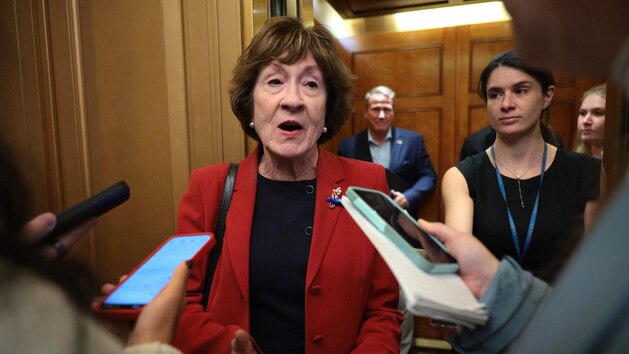
United States Space Force Col. Bree Fram poses for a portrait at home on Thursday June 05, 2025 in Reston, VA. (Matt McClain/The Washington Post via Getty Images)

(WASHINGTON) -- Overturning a new congressional map in Virginia that would have favored Democrats has had an outsized impact on the state’s U.S. House primaries, with at least four high-profile candidates so far suspending their campaigns.

With Virginia keeping its current congressional map, which currently has six Democrats and five Republicans, Democratic candidates face the prospect of either running in a GOP-leaning district or of mounting primary bids to incumbent Democrats.

Virginia’s primaries are Aug. 4, having been changed from their original date of June 16. The state had also moved its candidate filing deadline to May 26, so candidates can still get on the ballot ahead of the primary.

Col. Bree Fram, a transgender woman who came out and transitioned while serving in the Air Force and who had joined a lawsuit against the Trump administration over its ban on transgender individuals in the military, suspended her campaign for the proposed 11th District. She would have been mounting a primary challenge to incumbent Rep. James Walkinshaw regardless of which map was in place.

“With only five weeks before early primary voting, the ruling left this campaign without sufficient time and resources to meaningfully pivot to the previous district and have the kind of substantive debate voters deserve,” Fram wrote.

 Dorothy McAuliffe, the former first lady of Virginia who was running in the redrawn 7th District, announced last Saturday that she will similarly suspend her campaign. The 7th District is represented by Democratic Rep. Eugene Vindman.

"For me, representing Virginia in Congress was an opportunity to do good, make government deliver, protect fundamental freedoms, lower costs, defend democracy, and fight for those too often ignored,” said McAuliffe, who is married to former Virginia Gov. Terry McAuliffe.

J.P. Cooney, who had launched a bid for the 7th District and was the top deputy for former special counsel Jack Smith, who led investigations into President Donald Trump's alleged interference in the 2020 election and alleged mishandling of classified documents, suspended his campaign last Friday.

“I am disappointed that the Virginia Supreme Court's decision at the expense of the Commonwealth's voters is now final. Although this means the end of my congressional campaign, our movement to fight corruption and lawlessness is just beginning,” Cooney wrote on X.

Dan Helmer, a Virginia state delegate who had also launched a bid for the redrawn 7th District, said last Friday he had ended his campaign. 

“While I'm incredibly disappointed at tonight's news, I can't say I'm surprised. The MAGA playbook is straightforward: if you can't win at the ballot box, pack the courts… While our candidacy for Congress has ended, the path forward is clear: as I've said consistently, we need reform of the courts, here in Virginia, and in the federal judiciary,” he wrote in a statement on X

One major name has not yet confirmed her plans.

Olivia Troye, a former aide to Vice President Mike Pence who changed parties and was running as a Democrat in the proposed 7th District, wrote in a blog post last Wednesday that she had visited an ICE detention facility on the day of the Virginia Supreme Court decision, and that both that visit and the court decision “made me more certain than ever that I cannot walk away from this fight.”

Troye has not confirmed if she plans to withdraw from the race. ABC News has reached out to Troye and her campaign. Troye was among the highest-profile Trump administration officials to become a critic of the president during his first term.

One candidate has said he’s staying in the race even with the Democratic-favoring map thrown out.

Tom Perriello, a former member of Congress who had planned to run in the redrawn 5th District, said the day the Virginia Supreme Court’s ruling dropped that he is still going to run for Congress but is shifting to the current 5th District to try to unseat incumbent GOP Rep. John McGuire. Perriello represented the 5th from 2009 to 2011. 

“We are obviously aware of the Virginia Supreme Court decision, and as we said from the launch of the campaign, we will respect the will of the voters and the courts ... having done hundreds of listening sessions across Central and Southside Virginia over the last few months, I can say one thing that people on the right, left and center, seem to agree on is that McGuire needs to be fired and replaced by somebody who actually cares about Central and South Side Virginia,” he told reporters on Friday, just hours after the seismic court decision.

Copyright © 2026, ABC Audio. All rights reserved.

Rep. Clyburn says GOP redistricting push is part of larger Black disenfranchisement effort

Representative Jim Clyburn, a Democrat from South Carolina, during the National Action Network (NAN) 35th Anniversary Convention in New York, US, on Friday, April 10, 2026. (Photographer: Adam Gray/Bloomberg via Getty Images)

(WASHINGTON) -- U.S. Rep. James Clyburn, the longtime Black representative from South Carolina whose seat could be at stake in mid-decade congressional redistricting, told ABC News that he sees the redrawing of congressional seats held by Black lawmakers as part of a larger history of discrimination and disenfranchisement against Black Americans.

"I don't know why it's so hard for people to understand this. The country is attempting what I call 'Jim Crow 2.0.' It's just that simple," Clyburn said.

Some experts have told ABC News that the redistricting in the South could wipe out up to a third of seats in Congress held by African American legislators, and Black lawmakers have been expressing similar concerns ever since the mid-decade redistricting push by Republicans kicked off last year.

Republicans have argued that they are redrawing congressional maps to comply with the Supreme Court or to remedy unfairly-drawn districts, and that the districts that could be changed may still elect Black representatives to Congress.

But Clyburn told ABC News that if the focus remains solely on redistricting, the bigger picture is being missed.

“When I released the book ["The First Eight"], and that's the whole thing my book was about. I think a lot of people thought I was just whistling Dixie. But no,this is real. It's as real as anything can be. And we got to come to grips with that. So it's not just about congressional districts. It's affirmative action, closing colleges and universities to ordinary Blacks, it's about we're not able to get a job in the federal government, state government,” Clyburn said.

“They want to take away federal jobs in the federal government, remove that protection … getting rid of any kind of diversity and inclusion. So this is a very comprehensive thing.”

Clyburn was first elected to the House of Representatives in 1992, the first Black member of Congress from South Carolina in a century, after previously teaching high school history and being involved in political activism.

He spoke with ABC News just hours before South Carolina Gov. Henry McMaster announced Thursday evening in an executive order that he would call the state legislature in for an “extra” session to consider mid-decade redistricting.

McMaster's announcement came amid other states redrawing maps after the Supreme Court's recent ruling against Louisiana's congressional map. It also came just two days after, even in the face of pressure from President Donald Trump, the state Senate rejected a key bill that would have let the legislature consider mid-decade redistricting even after formally adjourning.

However, that specific, specialized bill needed a two-thirds majority to pass. In the extra session, a bill that could redraw the congressional map would only need a simple majority.

In a statement celebrating McMaster’s announcement, South Carolina Republican Party Chair Drew McKissick wrote, “Thanks to the Supreme Court ruling, Republicans have an opportunity to get this done, and we should maximize it. Now is the time for lawmakers to stand with President Trump, defend the Constitution, and finish the job.”

Clyburn, speaking before the special session became official, told ABC News he saw the Supreme Court’s decision in Louisiana vs. Callais, which struck down Louisiana's congressional map, as the continuation of a long line of other Supreme Court decisions he sees as detrimental – including the Citizens United v FEC ruling that unleashed billions of dollars from corporations, labor unions and other groups into American campaigns as a protected form of free speech; as well as the Dred Scott decision, which in 1857 held that Black Americans could never be citizens.

The Fourteenth Amendment, ratified 11 years after Dred Scott, was drafted to repudiate that decision and to prevent the creation of a hereditary class of noncitizens within the United States.

“I've been saying this about five or six years. Back when the Supreme Court made a decision … a lot of people look at me like I was some drunken sailor," Clyburn said. "I said, when the Supreme Court handed down the decision in the so-called Citizens United case, and that is when they created dark money. And I said at the time, I said, this Supreme Court decision will take its place along -- will compete with Dred Scott as one of the worst decisions ever made by the Supreme Court."

“Now, people couldn't see what I was saying at the time, but I've been studying history all my life. And when I saw that [Citizens United] decision, I knew that the foundation was being laid for taking over this country,’’ Clyburn said.

But Clyburn told ABC News that despite all of that, he does have hope for the nation's future.

"I'm a South Carolinian. Do you know what our state motto is? 'While I breathe, I hope.' I'm a real South Carolinian. Breathing and hoping," he said.

ABC News' Devin Dwyer and ABC News legal contributor James Sample contributed to this report.

Copyright © 2026, ABC Audio. All rights reserved.

Louisiana Sen. Bill Cassidy defeated, Julia Letlow and John Fleming advance to runoff, AP projects

Senator Bill Cassidy, a Republican from Louisiana and chairman of the Senate Health, Education, Labor, and Pensions Committee, during a confirmation hearing in Washington, DC, US, on Wednesday, April 22, 2026. Photographer: Eric Lee/Bloomberg via Getty Images

(NEW YORK) -- Two Republican challengers, Rep. Julia Letlow and state Treasurer John Fleming, will advance to a runoff election in Louisiana's closely watched GOP primary, The Associated Press projected Saturday -- a defeat for Sen. Bill Cassidy who had drawn the ire of President Donald Trump.

Letlow had been endorsed by Trump in a three-way race that was seen as a test of the president's influence among Republicans.

Letlow and Fleming will face off again in the runoff on June 27.

With nearly 100% of the estimated vote counted, Letlow led with about 45% of the vote, followed by Fleming with about 28%, according to the AP. Cassidy trailed with about 25% of the vote.

The primary defeat marks a stunning loss for Cassidy and a potential warning to other Republicans who risk defying the president, as Trump has sought to oust those he views as disloyal. Trump-backed candidates recently defeated several Indiana state senators who opposed his redistricting plans.

Cassidy's defeat makes him the first sitting senator to lose a primary since 2017 and the first elected incumbent senator to lose a primary since 2012 -- when Indiana GOP Sen. Richard Lugar lost his race to a Tea Party challenger.

Cassidy expressed gratitude for his time in office and acknowledged the race didn't go like he would have liked.

"But you don't pout, you don't whine, you don't claim the election was stolen," he said. "You don't manufacture some excuse --you thank the voters for the privilege of representing the state or the country for as long as you've had that privilege, and that's what I'm doing right now."

He also took a thinly veiled jab at Trump without naming him.

"Our country is not about one individual, it is about the welfare of all Americans, and it is about our Constitution," he said. "And it is the welfare of my people and my state and my country and our Constitution, to which I am loyal."

Trump celebrates

In a post on his social media platform, Trump celebrated Cassidy's projected defeat and congratulated Letlow.

"Julia Letlow is a fantastic person and, after taking care of some additional business, will make a brilliant Senator for the Great People of Louisiana," Trump said in the post.

In speech to supporters in Baton Rouge on Saturday night, Letlow opened her remarks thanking Trump.

"I want to say thank you to a very special man, who you all know – the best president this country has ever had: President Donald Trump," Letlow said.

"When he endorsed me in January, I knew this was going to be a tough race, but tonight Louisiana sent a clear message -- that they want a candidate to represent them in the Senate who will always put America first and never turn her back on Louisiana voters," Letlow continued.

Fleming expressed full confidence he will win the runoff.

"I embrace this challenge enthusiastically. The runoff starts today, and I could not be more energized," he said in a statement on Sunday.

"The people of Louisiana deserve a senator who cannot be bought, will not be bossed, and will never back down," Fleming said.

On the campaign trail

On the campaign trail, Letlow, a three-term congresswoman, was anything but shy about Trump's endorsement, casting Cassidy as disloyal and Fleming as out of touch with the president. Her campaign messaging focused in part on defending parental rights and securing the border.

Fleming, a former congressman who later served in various roles in the first Trump administration, pitched himself to voters as the most staunch conservative, though he did not receive a public endorsement from Trump.

For his part, Cassidy, a physician who was first elected to the Senate seat in 2014, argued his record proved he delivered for Louisianans and sought to tie himself to Trump -- campaigning on a conservative agenda, arguing against abortion, supporting "strong borders" and co-sponsoring the SAVE America Act, a legislative priority for Trump.

Trump's endorsement

Trump upended Cassidy's reelection bid in January when he encouraged Letlow to enter in hopes of defeating Cassidy.

Trump sought to punish Cassidy, who broke with the party as one of seven senators to vote to convict Trump for his role in inciting the Jan. 6 Capitol riot. The 57-43 vote fell shy of the 67 vote threshold needed to convict Trump.

In a Saturday morning social media post -- roughly two hours after polls opened --Trump again ripped on the two-term incumbent while endorsing Letlow. He called Cassidy "disloyal" and castigated him for using his name throughout the campaign.

Despite their fraught relationship, Cassidy has, at times, supported Trump's agenda. Cassidy, a physician and longtime proponent of vaccines, grilled Health Secretary Robert F. Kennedy Jr. -- a vaccine skeptic -- during his confirmation hearing but cast the deciding vote to advance his nomination.

Yet for some, Cassidy's vote to convict Trump may have been enough to do him in.

Robert Hogan, a political science professor at Louisiana State University, told ABC News ahead of the primary that some voters still had a "visceral" reaction to Cassidy's vote to convict the president.

"The Republican activists have been unforgiving," Hogan said. "This says less about Cassidy, I would say, than it says about the nature of the attraction that voters have towards Trump."

Copyright © 2026, ABC Audio. All rights reserved.

Tennessee Democrat Steve Cohen to retire in aftermath of redistricting

Rep. Steve Cohen pauses while speaking during a news conference in his office on Capitol Hill, May 15, 2026 in Washington. (Andrew Harnik/Getty Images)

(WASHINGTON) -- Rep. Steve Cohen, a longtime Tennessee Democrat, announced Friday he will not seek reelection and instead retire at the end of his term, after his Memphis district was carved up in the state assembly's redistricting effort.

"This is by far the most difficult moment I've had as an elected official," Cohen said. his voice choked with emotion as he announced he sent a letter Friday to the state capital asking not to appear on the ballot.

"I don't want to quit. I'm not a quitter, but these districts were drawn to beat me. They were drawn to defeat me," Cohen said.

Cohen is the first Democratic representative to opt for retirement after the Supreme Court's decision in Louisiana v. Callais, which held that race-conscious redistricting under Section 2 of the Voting Rights Act of 1965 is unconstitutional.

After the ruling, Tennessee state lawmakers passed a new congressional map that could allow Republicans to flip the state's lone Democratic-held seat.

Cohen's majority-minority district, Tennessee's 9th congressional district, is being split in three. Cohen has sued over the new map in court, as have several civil rights groups.

"Butchered," Rep. Bennie Thompson, a Mississippi Democrat whose district shares a border with Cohen, told ABC News about the Tennessee district.

"He's represented a majority-minority district as a white person. He's been well. He's had a consistent vote on behalf of his constituents, and all of a sudden, the court says take that opportunity away," Thompson said of Cohen. "But worse than that, Tennessee legislature split Memphis in three different ways. So now, as far as the Congress is concerned, there's no real community of interest in Memphis, because they're so divided."

Cohen is the 22nd House Democrat to opt against reelection to the House this midterm election cycle.

"Memphis is my home, and that's what I fight for, and I want to do it again. If I get the chance, I'll do it, but otherwise I'll be retiring from Congress, and from, I guess, from public life," Cohen said.

Copyright © 2026, ABC Audio. All rights reserved.


Trump won't commit to arms sale to Taiwan after stark warning from Xi

China's President Xi Jinping (R) and US President Donald Trump visit the Temple of Heaven on May 14, 2026 in Beijing, China. (Photo by Brendan Smialowski - Pool/Getty Images)

(WASHINGTON) -- After a second day of high-stakes meetings with China's Xi Jinping, President Donald Trump is not committing to approving the latest round of arms sales to Taiwan and brushed off previous U.S. assurances not to consult with Beijing about those sales.

"I'll make a determination over the next fairly short period," Trump said when asked about the arms sales by reporters aboard Air Force One.

The president's remarks came after Xi's stark warning that if the issue of Taiwan is handled "improperly," then the two nations could "come into conflict," according to China's official state news source Xinhua. However, Xi did say that if the issue is handled "properly" then "bilateral relations can remain generally stable."

Trump has been delaying the latest round of arms sales, for months refusing to sign off on the record $14 billion package that was approved in January 2025, despite urging from some lawmakers.   

Trump also told reporters that Xi asked him if he would come to Taiwan's defense if China were to attack, but Trump claims to have not revealed his thinking.  

"That question was asked to me today by President Xi. I said, 'I don't talk about, I don't talk about that,'" Trump said.

Taiwan's Mainland Affairs Council Deputy Minister Liang Wen-chieh said they are "paying close attention" to the Trump-Xi meeting.

Earlier Friday, Trump participated in a tea and working lunch with Xi.

On Iran, Trump said he and Xi feel "very similar" in wanting the war to end and prohibiting Iran from obtaining a nuclear weapon.

"We feel very similar in Iran. We want that to end. We don't want them to have a nuclear weapon. We want the [Strait of Hormuz] opened. We're closing it now. They closed it, and we closed it on top of them, but we want the straits open, and we want them to get it ended, because it's a crazy thing," Trump said at a photo opportunity earlier Friday.

Later, aboard Air Force One, Trump was pressed on whether Xi actually committed to pressuring Iran to reopen the Strait of Hormuz.

"I'm not asking for any favors, because when you ask for favors, you have to do favors in return. We don't need favors," Trump said.

Trump was seeking to bolster international support amid a push to reopen the Strait of Hormuz as the U.S. war with Iran stretches on. China is Iran's principal oil consumer.

The Chinese Foreign Ministry, responding to inquiries to confirm whether Trump and Xi discussed Iran, sidestepped the question but reiterated China's position that the ceasefire and negotiations should continue and that the Strait of Hormuz should be reopened.

"There is no need to continue this war that should not have happened," a spokesperson for the Foreign Ministry said. "Finding a solution earlier is beneficial to the United States and Iran, as well as to the countries in the region and even the whole world."

"Since the door of dialogue is open, it should not be closed again," the spokesperson said.

Before Friday's meeting, Trump met Xi to tour the gardens at Zhongnanhai, the Chinese Communist Party leadership compound.

Xi said he picked the location "especially to reciprocate the hospitality extended to me in 2017 at Mar-a-Lago." Xi said Trump was interested to learn about the plants in the garden including the Chinese roses. Xi said he "agreed" to gift Trump seeds for those roses. 

Tech and trade have also been key themes during the talks. Trump said the two leaders "made some fantastic trade deals."

CEOs Elon Musk of Tesla and SpaceX, Tim Cook of Apple and Jensen Huang of NVIDIA, among others, traveled with the president to Beijing. Trump said the business leaders joined him to "pay respects" to Xi.

The White House said one of Trump's goals going into the summit with Xi is to secure purchasing agreements with China in the aerospace, agriculture and energy sectors and the CEOs traveled with the president to help push for that.

Trump said Xi agreed to initially purchase 200 Boeing planes, which could go up to 750 planes if all goes well. Boeing has not confirmed this deal, referring inquiries to the White House. 

Trump also said China has agreed to buy "billions of dollars" of soybeans, though he didn't get into specifics.

U.S. Trade Representative Jamieson Greer had said on Friday that the U.S. expects China to buy tens of billions of dollars worth of American agricultural products in the next few years.

"We expect to also see an agreement for double-digit billion purchases ... over the next three years, per year, coming out of this visit, and that's more general, that's aggregate, that's not just soybeans, that's everything else," Greer told Bloomberg.

ABC News' Karson Yiu, Mariam Khan, Michelle Stoddart and Kevin Shalvey contributed to this report.

Copyright © 2026, ABC Audio. All rights reserved.

A third of the Congressional Black Caucus could lose seats amid redistricting fight

: House Minority Leader Hakeem Jeffries (D-NY) speaks at a press conference with other members of the Congressional Black Caucus on the Supreme Court decision in Louisiana v. Callais, at the U.S. Capitol in Washington, DC on April 29, 2026. (Photo by Nathan Posner/Anadolu via Getty Images)

(WASHINGTON) -- Almost a third of the membership of the Congressional Black Caucus -- 19 of its 62 members -- are at risk of losing their seats through the 2028 election cycle as Republicans in southern states where they control the legislature move swiftly to redraw congressional maps less than two weeks after the Supreme Court dealt a blow to Section 2 of the Voting Rights Act.

The mid-decade redistricting push is a continuation of an effort that began in 2025 and that President Donald Trump has encouraged in hopes of increasing the likelihood that the GOP will retain control of the House of Representatives in November's midterm elections.

Republicans have argued that they are redrawing congressional maps to comply with the Supreme Court and that the districts that could be changed may still elect Black representatives to Congress.

A spokesperson for the Congressional Black Caucus told ABC News that the group is coordinating with groups such as Elias Law Group and the Legal Defense Fund to challenge the GOP's redistricting efforts.

The Supreme Court on Monday evening opened the door for Alabama to eliminate at least one of its majority-Black congressional districts before this year's midterm elections, potentially handing Republicans an additional House seat in the fight for control of the closely divided chamber.

Following Republicans' redistricting efforts in the South in states like Louisiana, South Carolina and Tennessee, House Minority Leader Hakeem Jeffries vowed a strong response, listing specific states without sharing specific actions.

"Over the next year or so, what you're going to see in state after state are Democrats making clear that we are not going to unilaterally disarm," Jeffries said.

"And as a result of that, in places like New York, New Jersey, Oregon, as well as Washington, in Colorado and, of course, in Illinois and Maryland, we're going to take the steps necessary to ensure that in advance of the 2028 election, we have a decisive and overwhelming response."

Alabama Rep. Shomari Figures, whose seat is now in jeopardy as a result of the Supreme Court's 6-3 ruling, said in a statement to ABC News that the decision "sets the stage for Alabama to go back to the 1950s and 60s in terms of Black political representation in the state."

Rep. Emmanuel Cleaver of Missouri, whose seat was one of the first targeted by redistricting, said that the ongoing redistricting efforts are "trying to send us back to Reconstruction."

Cleaver told ABC News that he is supportive of Jeffries' stance of "maximum warfare" against GOP-led redistricting efforts, but he worries that "if we fight fire with fire, nothing would be left in the station but ash."

Cleaver has held his seat for more than two decades and is running for reelection, but now says he has "no idea" what district he's running in and that Democrats may need to redistrict in states like Illinois, Maryland, New York, New Jersey and Colorado to fight back.

Rep. Jim Clyburn, who is also at risk of losing his seat if redistricting succeeds in South Carolina, took aim at a series of U.S. Supreme Court decisions that he said had enabled this sort of targeting of Black legislators, as well as actions by Trump that he said threaten American democracy.

"You know, this is whether or not you're going to have a democracy. And that's not a one-party thing, that's not a one-person thing; that is, this country has come to grips with the fact that we are on the verge of a kleptocracy," Clyburn said.

While CBC members have continued to push for the passage of the John R. Lewis Voting Rights Advancement Act, Cleaver said that in the current Congress, the legislation "could not get a hearing in the United States of America right now."

Last Thursday, Tennessee became the first state after the Supreme Court's Louisiana ruling to officially redraw and pass a new map at the urging of the president, who called the state's governor about the topic just one day after the ruling. And in one week, a new congressional map was created, presented and passed. The new map will give Republicans a chance to flip the state's lone current Democratic-held, majority-Black district, which is primarily made up of Memphis.

Following the Supreme Court's ruling on Monday evening that opened the door for Alabama to eliminate at least one of its majority-Black districts before this year's midterms, Alabama Gov. Kay Ivey has set new special primary elections for the affected districts in the state: the 1st, 2nd, 6th and 7th.

Louisiana and South Carolina are also working through their own redistricting process in hopes of delivering more House seats to the GOP ahead of November's elections. In South Carolina, Republicans on Friday formally unveiled a new proposed congressional map that would redraw the district held by Clyburn.

But as Republicans look to add House seats, Black representation in Congress is at risk of dropping substantially over the next couple of years.

NAACP President Derrick Johnson said in a statement to ABC News, "We are witnessing a return to Jim Crow. And anybody who is alarmed by these developments -- as everybody should be -- better be making a plan to vote in November to put an end to this madness while we still can."

"This Supreme Court did not dismiss the case, so the litigation will certainly continue. My hope is that this is a temporary setback and that three-Republican appointed judges will again find what they found the first time: that the State of Alabama intentionally discriminated against Black voters in drawing its congressional district lines," Figures added.

ABC News' Oren Oppenheim and Jeff Ballou contributed to this report
 

Copyright © 2026, ABC Audio. All rights reserved.

Border Patrol chief Michael Banks is stepping down

Michael Banks, chief of the US Border Patrol, speaks during a news conference in Nogales, Arizona, US, on Wednesday, Feb. 4, 2026. (Ash Ponders/Bloomberg via Getty Images)

(WASHINGTON) -- Michael Banks, the head of U.S. Border Patrol, is stepping down, U.S. Customs and Border Protection Commissioner Rodney Scott confirmed on Thursday.

"We thank U.S. Border Patrol Chief Michael Banks for his decades of service to this country and congratulate him on his second retirement after returning to serve during one of the most challenging periods for border security," Scott said in a statement.

"During his time as Chief, the border was transformed from chaos to the most secure border ever recorded. We wish him and his family well," Scott added.

Banks was tapped to lead the agency by President Donald Trump in January 2025. He has helped oversee the administration's immigration crackdown.

His departure is just the latest in what has been a major shakeup of immigration leadership in recent months. 

In March, the Senate confirmed then-Sen. Markwayne Mullin to replace Kristi Noem as Homeland Security secretary after Noem was removed from the post by President Donald Trump.

That same month, Gregory Bovino retired as commander-at-large of CBP immigration enforcement operations.

Immigration Customs and Enforcement Director Todd Lyons is expected to depart his post at the end of the month. Dave Venturella, a former career ICE agent, is set to take his place.

Copyright © 2026, ABC Audio. All rights reserved.

RFK Jr. spokesman resigns over fruit-flavored e-cigarette concerns, letter says

Secretary of Health and Human Services Robert F. Kennedy Jr. speaks during an event on advancing health care affordability in the Oval Office of the White House, April 23, 2026 in Washington. (Alex Wong/Getty Images)

(WASHINGTON) -- One of Health Secretary Robert F. Kennedy Jr.’s top public affairs spokespeople resigned from his post over the FDA's fruit-flavored e-cigarettes authorization and its potential impact on minors, according to a resignation letter to President Donald Trump reviewed by ABC News.

In the letter, Richard Danker, the former assistant secretary for public affairs at the Department of Health and Human Services, accuses senior agency officials in Kennedy's immediate office of approving e-cigarette flavors that would allegedly expose children to "nicotine addiction, lung damage, and a higher risk of cancer."

Danker also said the vape authorization "undermines" the department's recent guidance document related to youth risks of flavored nicotine, according to the letter.

He thanked Trump for the "honor of a lifetime" to serve in both presidential administrations. Danker's work portfolio includes economic regulatory roles, including a senior advisor position at the Department of Treasury during the first Trump administration. Danker hadn't worked in healthcare prior to his time at HHS.

The Trump administration’s Make America Healthy Again movement has touted its focus on combatting chronic disease and improving children’s health. In a statement to ABC News, an HHS spokesperson said Kennedy is advancing the MAHA agenda to confront the chronic disease epidemic head-on.

"Political appointees are here to execute that mission with urgency, discipline, and focus," according to the spokesperson.

"Individuals who lose sight of the mission and the responsibility they were entrusted with are free to move on from the agency. HHS remains fully committed to delivering results for the American people," the spokesperson said.

Danker provided ABC News with a copy of the resignation letter, but did not provide further comment.

The White House did not immediately respond to ABC News’ requests for comment.

The news comes as former Food and Drug Administration Commissioner Marty Makary left office after clashing with the White House over pressure from Trump to authorize the flavored vapes, sources familiar with the matter told ABC News.

The issue has raised concerns with Makary, pediatrician groups and advocacy organizations about the potential impact on minors, ABC News reported.

The FDA approved four new devices made by Glas, including classic menthol, fresh menthol, gold, and sapphire pods. "Gold" is mango-flavored and "sapphire" is blueberry-flavored.

While the FDA said on its website last week that it continues to prioritize the removal of illicit vapes — including those that target minors — the approval of a flavored vape represents a significant shift for the agency.

Makary told ABC News' Linsey Davis in July, "There is not an approved vaping product in the United States that has one of these cutie-fruity flavors."

Copyright © 2026, ABC Audio. All rights reserved.

Senators adopt resolution to withhold their own pay during government shutdowns

The U.S. Capitol Building dome, on May 12, 2026, in Washington, DC. (Graeme Sloan/Getty Images)

(WASHINGTON) -- Senators adopted a resolution by unanimous consent on Thursday to withhold their own pay during government shutdowns.

The legislation, which won't take effect until after the November 2026 election, instructs the secretary of the Senate to place senators' paychecks on hold during the duration of any future federal government shutdowns.

Those payments would be released to lawmakers only after the government reopens. 

The Senate resolution does not need to be passed by the House or signed by President Donald Trump. While multiple similar House bills have been introduced, it's unclear if legislation in the lower chamber will pass.

The measure in the Senate was introduced by Republican John Kennedy and advanced in a unanimous 99-0 vote on Wednesday.

"Take your brain with you, because this is about shared sacrifice. This is about putting our money where our mouth is," Sen. Kennedy said on the Senate floor ahead of Wednesday's vote.

Kennedy's resolution comes after federal workers faced a historic 43-day government shutdown late last year caused by a deadlock between parties over Affordable Care Act subsidies.

During that time, approximately 670,000 federal workers were furloughed, 60,000 workers outside the federal government lost their jobs and Supplemental Nutrition Assistance Program (SNAP) recipients lost out on benefits all while members of Congress continued to get paid -- highlighting the disparity of financial pain endured by members of Congress and the people they serve. 

Calls for withholding pay from members of Congress continued to grow this year during the record 75-day partial shutdown of the Department of Homeland Security. Transportation Security Administration agents, Coast Guard members and other department employees went without pay as a stalemate played out on Capitol Hill over immigration enforcement funding and oversight reforms.

Copyright © 2026, ABC Audio. All rights reserved.

Xi warns Trump that US and China will 'clash' if Taiwan is handled 'improperly'

Chinese youth hold American and Chinese flags as they join officials to welcome U.S. President Donald Trump at Beijing Capital International Airport, May 13, 2026 in Beijing, China. (Alex Wong/Getty Images)

(BEIJING, China) -- Chinese President Xi Jinping issued a warning to President Donald Trump during their high-stakes summit in Beijing, saying that if the issue of Taiwan is handled "improperly," the two nations could "come into conflict," according to China's official state broadcaster Xinhua.

The trip came at a crucial time for Trump as the war with Iran loomed and was leading to economic consequences for Americans at home. China is Iran's principal oil consumer.

Particularly thorny for China is the issue of Taiwan and the U.S. position on the matter has long been delicate.

However, Xi did say that if the issue is handled "properly," "bilateral relations can remain generally stable."

After a dramatic welcoming ceremony, Trump sat down with Xi on the first day of a multi-day summit, during which Trump said he'd seek to deepen diplomatic and economic ties between the world's two largest economic powers.

Trump and Xi had a “good meeting,” according to a White House official, but the official readout has no mention of Taiwan -- which Xi earlier warned of a “conflict” if the issue was handled improperly.

Iran was also discussed between the leaders, with both sides agreeing that the Strait of Hormuz should remain open. This is a position China has already held.

"The two sides agreed that the Strait of Hormuz must remain open to support the free flow of energy. President Xi also made clear China’s opposition to the militarization of the Strait and any effort to charge a toll for its use, and he expressed interest in purchasing more American oil to reduce China’s dependence on the Strait in the future. Both countries agreed that Iran can never have a nuclear weapon.”

The meeting also covered investments, economic cooperation, fentanyl and increasing Chinese purchases of American farm products.

The bilateral meeting between the two leaders in the Great Hall of the People lasted about 2 hours and 15 minutes, according to pool reporters traveling with the president.

Ahead of the meeting, after Trump and a slate of other U.S. officials had gathered around the negotiating table, Trump called Xi a "great leader" and touted their relationship.

"Such respect for China, the job you've done. You're a great leader. I say it to everybody. You're a great leader," Trump said. "Sometimes people don't like me saying it, but I say it anyway, because it's true. I always say the truth."

"We've had a fantastic relationship. We've gotten along," Trump said. "When there were difficulties, we worked it out. I would call you, and you would call me, and whenever we had a problem -- people don't know -- whenever we had a problem, we worked it out very quickly, and we're going to have a fantastic future together."

In his opening remarks, Xi told Trump that China and the U.S. "both stand to gain from cooperation and lose from confrontation."

"We should be partners, not rivals, "he continued. "We should help each other succeed and prosper together and find the right way for major countries to get along well with each other in the new era."

According to a bulletin from Xinhua, Xi emphasized that the issue of Taiwan is "the most important issue in China-U.S. relations," saying if they are "if handled improperly, the two countries will clash or even come into conflict, pushing the entire China-U.S. relationship into a very dangerous situation."

Ahead of the visit, Secretary of State Marco Rubio told Fox News that the U.S. will urge China to take a more assertive role in resolving the U.S.'s war with Iran during Trump's meeting with Xi.

"It's in their interest to resolve this. We hope to convince them to play a more active role in getting Iran to walk away from what they're doing now and trying to do now in the Persian Gulf," Rubio said during an interview taped on Air Force One Tuesday while Rubio and Trump were on their way to Beijing.

"We've made clear to them, you know, that any support for Iran would obviously be detrimental for our relationship. That obviously is going to come up in this conversation," Rubio said.

Ahead of the state dinner, Trump was asked whether the pair would discuss diplomatic ways to end the war with Iran, which is in its third month. China is a key buyer of Iranian oil, which could give it considerable diplomatic leverage over Tehran, experts told ABC News. Trump said the U.S. had Iran "very much under control," adding that it would be among the topics discussed.

"We're either going to make a deal or they're going to be decimated, one way or the other. We win," Trump said. "We're going to be talking about, we're going to be talking with President Xi."

In remarks at the Great Hall this morning, President Trump delivered a history lesson of the “special” US-China relationship, while thanking his “friend” President Xi for a “magnificent welcome like none other.”

Trump called this a “historic visit” that resulted in “extremely positive and productive conversations,” even extending an invite for Xi to visit the U.S on Sept. 24.

The last time Xi visited the White House was in September 2015 when former President Obama hosted him for a State Visit. The visit will be one of four meetings that the leaders wanted to have this year as part of their agreement last fall that put a pause on the tit-for-tat tariff war last year.

Trump said on social media on Tuesday that he planned to ask Xi to "open up" the Chinese economy. The U.S. delegation includes Rubio, Treasury Secretary Scott Bessent, Defense Secretary Pete Hegseth, U.S. Ambassador to China David Perdue and U.S. Trade Representative Jamieson Greer. CEOs Elon Musk of Tesla and SpaceX, Tim Cook of Apple and Jensen Huang of NVIDIA as well as the president's son Eric Trump and daughter-in-law Lara Trump were also present.

Trump said the business leaders joined him to "pay respects" to Xi.

"We asked the top 30 in the world. Every single one of them said 'yes,' and I didn't want the second or the third in the company. I wanted only the top. And they're here today to pay respects to you and to China, and they look forward to trade and doing business, and it's going to be totally reciprocal on our behalf," Trump said.

The White House said one of Trump's goals going into the summit with Xi is to secure purchasing agreements with China in the aerospace, agriculture and energy sectors and the CEOs traveled with the president to help push for that.

China's Foreign Ministry spokesperson, Guo Jiakun, said that the scheduled diplomatic meetings were expected to play "an irreplaceable role in providing strategic guidance for China-U.S. relations."

"During the visit, the two heads of state will have an in-depth exchange of views on major issues concerning China-U.S. relations and world peace and development," Guo added, according to a transcript published by the ministry. "China stands ready to work with the U.S. to expand cooperation and manage differences in the spirit of equality, respect and mutual benefit, and provide more stability and certainty for a transforming and volatile world."

ABC News' Mariam Khan and Fritz Farrow contributed to this report.

Copyright © 2026, ABC Audio. All rights reserved.


Breakdown of $1 billion request for Trump's White House ballroom project

Cranes overlook the White House, as construction of the new ballroom extension continues, following demolition of the East Wing, on April 11, 2026. (Al Drago/Getty Images)

(WASHINGTON) -- ABC News has obtained a one-page breakdown of how the White House says it intends to spend the $1 billion that some Republicans want to approve for President Donald Trump's East Wing renovation to the White House, which includes the construction of Trump's massive ballroom.

The document -- which was provided without elaboration -- was presented by U.S. Secret Service Director Sean Curran to Senate Republicans during a luncheon on Tuesday.

The price breakdown for each target area of the project area is:

$220 million for White House hardening
$180 million for White House visitor security screening facility
$175 million for Secret Service training
$175 million for enhancements for Secret Service protectees
$150 million for evolving threats and technology
$100 million for events of national significance

Axios was first to report the news.

While the White House has insisted the funding is necessary in the wake of the assassination attempt against Trump at the White House Correspondents' Association dinner, Senate Republicans still appeared skeptical of the $1 billion request following Curran's briefing.

"He gave us a list that breaks down the spending in a little more detail, but ... there are still a lot of questions," said Republican Sen. John Kennedy. "It's not the only concern, but one of the biggest concerns on our side is adding to the deficit."

While Senate Majority Leader John Thune remains adamant that the request could be tucked into the ongoing reconciliation process, it faces an uphill battle earning 50 Republican votes.

It's also not clear whether the provision will make it through the Senate's rigorous review process. Democrats are expected to argue before the Senate's parliamentarian that the spending is extraneous and therefore should not be allowed to be included in a reconciliation bill. 
Since news of Republicans' intention to include funding for the ballroom became public last week, Democrats have repeatedly hammered the proposal. Senate Minority Leader Chuck Schumer criticized the administration for focusing on the ballroom instead of lowering consumer costs during a speech on the Senate floor on Wednesday morning.

"At a time when 77% -- that's 77% -- of Americans say that Donald Trump's policies have increased their cost of living, Trump and the Senate GOP try to force through a bill that would spend a billion taxpayer dollars on a gilded ballroom and not one penny on bringing down costs," Schumer said, referencing a CNN poll out earlier this week that found 77% say that Trump’s policies have increased the cost of living in their own community.

"Trump may be trying to build a ballroom but clearly he is living in the theater of the absurd," Schumer added.

The $1 billion request is in addition to the annual USSS budget, $3.2 billion in FY 2025.

Copyright © 2026, ABC Audio. All rights reserved.


Weather Center

High School Scoreboard

Sports Scores

Facebook